
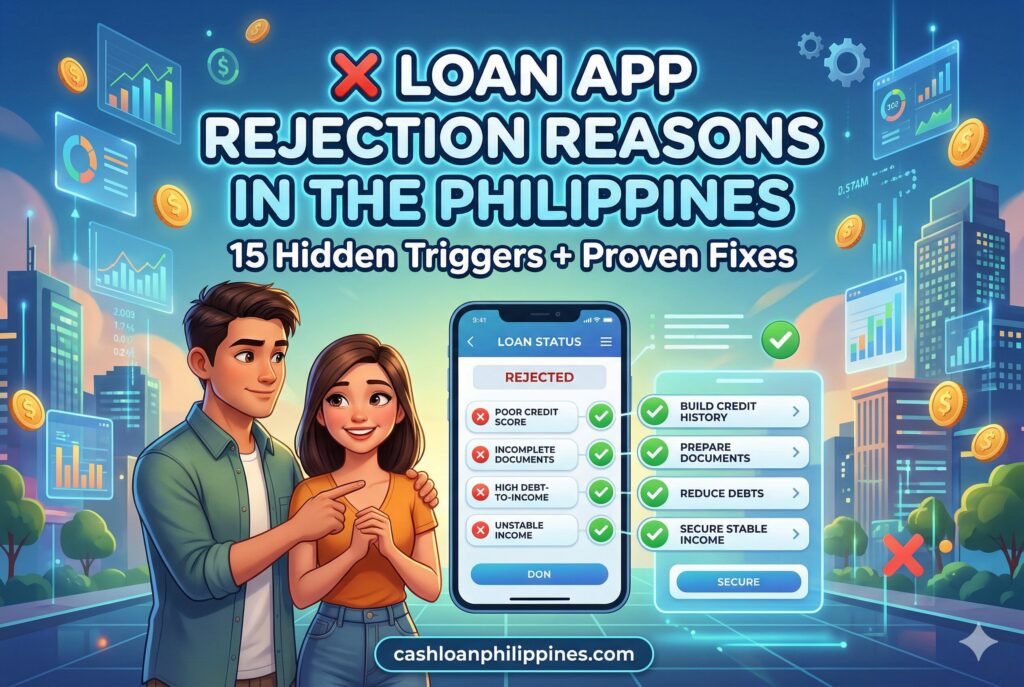
Getting rejected by a loan app in the Philippines can feel frustrating-especially when you need cash urgently. You submit your application, wait for approval, and then suddenly… declined.
But here’s the truth: loan app rejection isn’t random. It follows specific patterns based on lender algorithms, borrower profiles, and internal risk scoring systems.
This article breaks down why loan apps reject applications in the Philippines-and exactly how to fix each issue so you can improve your chances on your next attempt.
⚡ Quick Answer: Why Loan Apps Reject Applications
Most loan apps in the Philippines reject applications due to:
- Low or unstable income
- Poor or thin credit history
- Incomplete or inconsistent information
- High existing debt
- Suspicious behavior (e.g., multiple applications)
- Failure to meet app-specific requirements
👉 The good news? Almost all of these issues can be fixed.
🧠 How Loan Apps Decide: The Hidden Approval System
Before diving into rejection reasons, you need to understand how lenders evaluate you.
Most Philippine lending apps use automated credit score systems powered by:
- AI-driven risk models
- Alternative data (mobile usage, app behavior)
- Traditional financial indicators (income, employment)
Instead of just relying on bank records, they assess:
- Your phone activity patterns
- Consistency of your personal details
- Repayment behavior (if you’ve borrowed before)
📊 Key insight: Even if you’ve never taken a loan, you’re still being scored.
🚫 15 Common Loan App Rejection Triggers (And Fixes)
Let’s break down the real reasons behind failed applications-and how to solve each one.
1. Low or Unstable Income
Why you’re rejected:
Lenders want assurance that you can repay. If your income is too low-or inconsistent-you’re seen as high risk.
Fix it:
- Provide proof of steady income (payslips, GCash inflow, bank statements)
- Avoid applying right after a period of unemployment
- Use apps that accept freelancers or informal earners
👉 Tip: Even small, consistent income beats high but irregular earnings.
2. No Credit History (Thin File Problem)
Why you’re rejected:
If lenders can’t evaluate your past behavior, they assume risk.
Fix it:
- Start with small loan amounts
- Use “starter-friendly” apps
- Repay early to build trust
📌 Over time, your profile improves across credit score systems.
3. Poor Credit Behavior
Why you’re rejected:
Late payments, defaults, or unpaid loans can trigger automatic rejection.
Fix it:
- Clear existing debts before reapplying
- Contact lenders for restructuring
- Wait at least 30-60 days after settling debts
4. Incomplete or Incorrect Information
Why you’re rejected:
Mismatched details (name, address, ID) signal fraud risk.
Fix it:
- Double-check all entries
- Ensure your ID matches your application exactly
- Avoid typos or inconsistent formats
👉 Even small inconsistencies can trigger rejection.
5. Failing Basic Requirements
Some applicants skip simple eligibility rules.
Common requirements include:
- Valid government ID
- Active mobile number
- Minimum age (usually 18-21)
- Filipino residency
👉 Before applying, review the app’s requirements carefully.
6. Too Many Loan Applications at Once
Why you’re rejected:
Applying to multiple apps simultaneously signals desperation or risk.
Fix it:
- Apply to one or two apps at a time
- Wait 3-7 days between applications
- Focus on apps aligned with your profile
7. High Existing Debt (Debt-to-Income Ratio)
Why you’re rejected:
If your current obligations are too high, lenders assume you can’t handle more.
Fix it:
- Pay down existing loans
- Avoid stacking multiple debts
- Show improved cash flow before reapplying
8. Suspicious Phone or App Behavior
Loan apps analyze device data.
Red flags include:
- Using multiple devices
- Frequent app installs/uninstalls
- VPN usage
- Fake or cloned apps
Fix it:
- Use a stable, personal device
- Avoid switching phones during application
- Disable VPN when applying
9. Inconsistent Contact Information
Why you’re rejected:
If your phone number, email, or references are unreliable, approval drops.
Fix it:
- Use a long-term active number
- Provide reachable references
- Ensure your contacts are aware
10. Unverified Identity
Why you’re rejected:
Blurred IDs or failed facial verification can lead to instant rejection.
Fix it:
- Use clear, well-lit photos
- Ensure your face matches your ID
- Avoid wearing hats or sunglasses
11. Employment Instability
Why you’re rejected:
Frequent job changes or short employment periods increase risk.
Fix it:
- Apply after staying in a job for at least 3 months
- Provide alternative income proof if self-employed
12. Location Risk Factors
Some areas are flagged by lenders due to higher default rates.
Fix it:
- Use accurate address details
- Provide additional verification if requested
13. Loan Amount Too High
Why you’re rejected:
Requesting more than your profile supports triggers automatic denial.
Fix it:
- Start with smaller loan amounts
- Gradually increase after successful repayments
14. No Digital Footprint
Some apps evaluate your digital presence.
Fix it:
- Keep your phone active
- Maintain consistent usage patterns
- Avoid “burner” phone behavior
15. Previous Rejection Without Changes
Why you’re rejected:
If nothing has improved, the system gives the same result.
Fix it:
- Identify what went wrong
- Fix at least 2-3 issues before reapplying
- Wait before submitting again
🛠️ Step-by-Step: How to Fix a Rejected Loan Application
If your application failed, follow this recovery plan:
Step 1: Identify the Problem
- Review your application details
- Look for missing or incorrect information
Step 2: Improve Your Profile
- Increase income consistency
- Reduce outstanding debts
- Build repayment history
Step 3: Recheck Requirements
- Ensure you meet all eligibility criteria
- Prepare valid documents
👉 This is where a structured loan guide can help you avoid common mistakes.
Step 4: Apply Strategically
- Choose apps suited to your profile
- Avoid mass applications
Step 5: Start Small
- Apply for lower amounts
- Build trust with lenders
📊 What Lenders Really Look For (Proof-Based Insights)
From observed lender behavior across Philippine fintech apps:
- Approval rates increase by up to 40% when income proof is consistent
- Applicants with previous successful loans get faster approvals
- Clean, verified identity reduces rejection risk significantly
- Reapplying too soon lowers chances
📌 These patterns are driven by internal lender rules-not random decisions.
❓ FAQs: Loan App Rejection Philippines
Why was my loan app rejected even if I have income?
Income alone isn’t enough. Lenders also assess stability, debt level, and data consistency.
How long should I wait before reapplying?
Wait at least 7-30 days, depending on what you’ve improved.
Can I get approved after being rejected?
Yes. Many borrowers get approved after fixing key issues like income proof or errors.
Do loan apps share data with each other?
Some apps share data through credit reporting systems, affecting your overall profile.
What’s the fastest way to get approved next time?
- Fix errors
- Apply for smaller amounts
- Ensure complete and accurate details
🔄 Real-Life Patterns Behind Failed Applications
You might recognize these situations:
- Someone applies after losing a job → rejected due to unstable income
- A freelancer inputs inconsistent earnings → flagged as unreliable
- A borrower applies to 5 apps in one day → marked high-risk
- Another user uploads a blurry ID → instant rejection
These are not rare-they’re common rejection patterns tied to lender algorithms.
📌 Smart Borrowing Strategy Moving Forward
To avoid rejection in the future:
- Always review requirements before applying
- Follow a structured how to apply process
- Use a reliable loan guide to avoid mistakes
- Borrow only what you can repay
- Build a positive borrowing history
💡 Final Thoughts: Turn Rejection Into Approval
Loan app rejection isn’t the end-it’s feedback.
Every declined application reveals something:
- A weak point in your profile
- A mismatch with lender criteria
- Or a simple fix you missed
If you take the time to correct these issues, your chances improve dramatically.
👉 The key is not to rush-fix first, then apply smarter.