
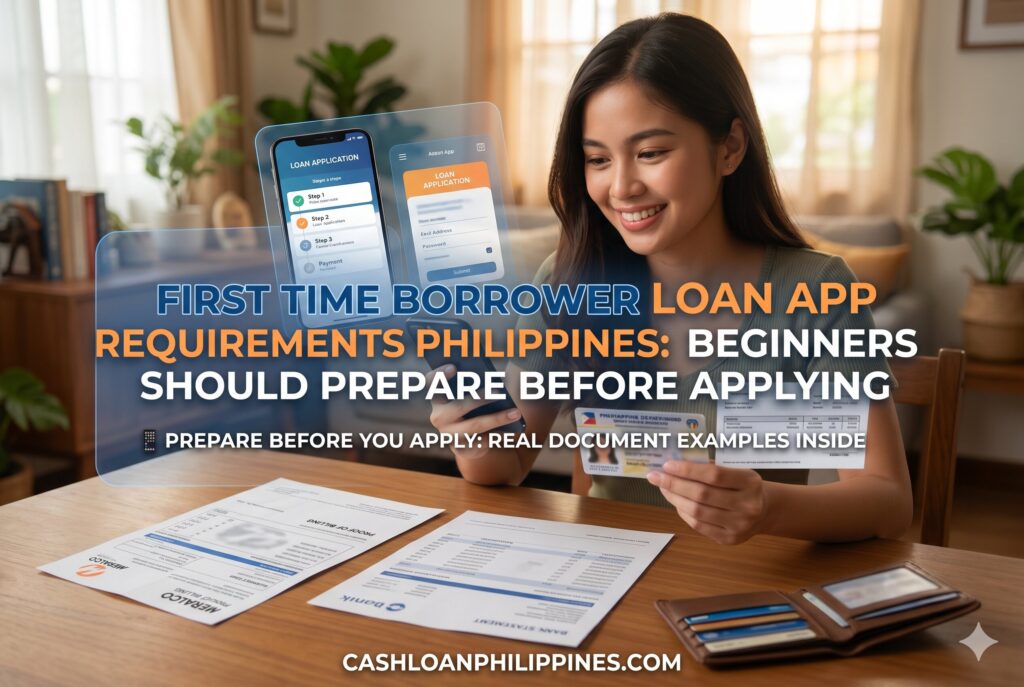
Applying for your first digital loan in the Philippines can feel intimidating. Many new borrowers worry about rejection, hidden requirements, app permissions, or whether they even qualify without a long financial history. The good news is that most Philippine loan apps are designed specifically to onboard beginners, including young workers, freelancers, online sellers, and users without traditional bank relationships.
Many fintech lenders focus less on perfect credit records and more on identity verification, repayment capacity, mobile activity consistency, and profile completeness. If you know what lenders are checking before you apply, the process becomes much easier and less stressful.
Summary:
First-time borrower loan app requirements in the Philippines usually include a valid government ID, active mobile number, selfie verification, proof of income or alternative earnings, and an active e-wallet or bank account for disbursement. Digital lenders also evaluate profile completeness, contact consistency, mobile device behavior, and repayment risk indicators during onboarding. Beginners can improve approval chances by submitting accurate information, maintaining an active SIM card, using consistent personal details across documents, and borrowing small amounts first. Most first-time approvals involve lower loan limits while lenders build repayment trust through borrower behavior and verification quality.
Why Loan Apps Still Approve First-Time Borrowers
Many beginners assume they need years of credit history before applying for a loan. That is no longer true in much of the Philippine fintech lending market.
Digital lenders now use alternative verification systems to evaluate applicants who may not have:
- Credit cards
- Traditional bank loans
- Large savings accounts
- Long employment history
- Formal payslips
Instead, many mobile apps analyze digital trust indicators.
These may include:
- Mobile number activity
- Device consistency
- Identity verification quality
- Employment stability
- E-wallet usage
- Repayment potential
- Application behavior patterns
For example, a young employee who regularly uses GCash or Maya, keeps the same SIM card for years, and submits complete information may appear lower risk than someone with inconsistent data.
This shift helped expand financial access across the Philippines, especially among:
- Freelancers
- Delivery riders
- Online sellers
- BPO employees
- Students with side income
- Gig workers
- Provincial borrowers without credit history
Lenders know first-time borrowers are part of their growth market. That is why many apps offer small-ticket starter loans before increasing limits later.
What Most Loan Apps Require From First-Time Borrowers 📋
Requirements vary slightly across lenders, but most onboarding flows follow a similar structure.
Identity Verification Requirements
Almost every regulated digital lender in the Philippines requires Know Your Customer (KYC) verification before approval.
Common requirements include:
- Valid government-issued ID
- Selfie verification
- Full legal name
- Birthdate
- Current address
- Mobile number
- Email address
Accepted IDs commonly include:
- UMID
- PhilSys National ID
- Driver’s License
- Passport
- PRC ID
- Voter’s ID (limited acceptance)
- Postal ID (depending on lender)
Apps compare your submitted information against anti-fraud systems. Even small mismatches between your ID and application form can delay approval.
Income and Financial Activity Checks
Not all lenders require formal payslips.
Many now accept alternative income indicators such as:
- GCash transaction history
- Online selling income
- Freelance earnings
- Remittance activity
- Commission-based work
- Digital wallet cash flow
- Bank transfer records
This is why many borrowers search for loan apps accepting alternative income proof before applying.
Borrowers with irregular income can still qualify if they demonstrate stable cash activity over time.
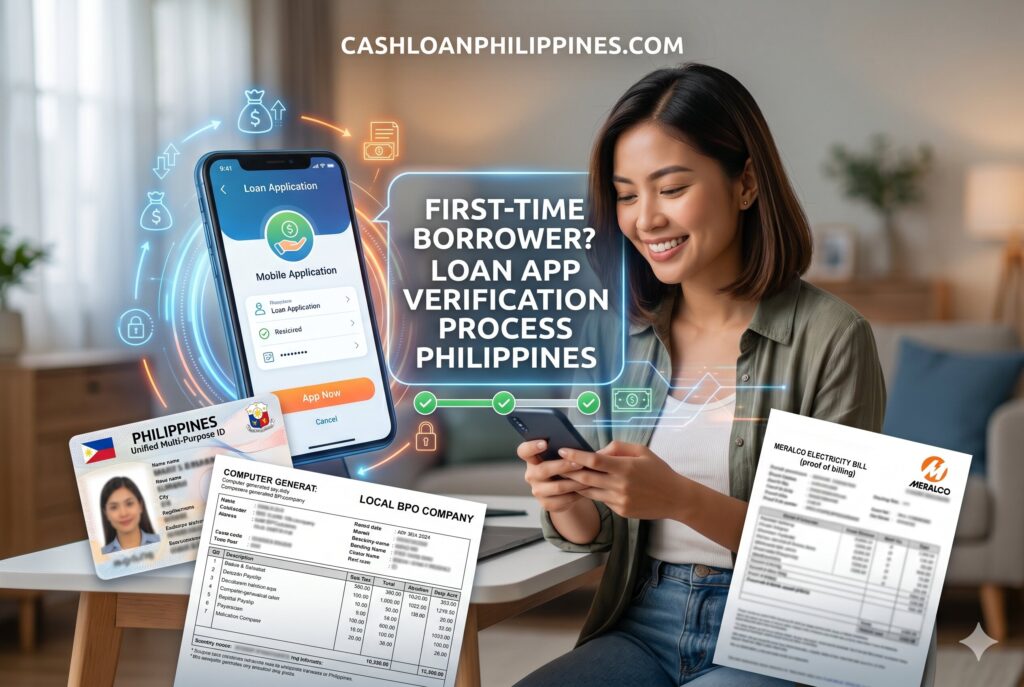
First-Time Borrower Loan App Verification Process Philippines
How Loan Apps Analyze First-Time Borrowers Behind the Scenes
Many beginners think approval depends only on salary size. In reality, digital lenders use layered risk analysis systems.
Profile Completeness Matters More Than Many Borrowers Realize
Incomplete profiles create uncertainty for lenders.
Applications are often flagged when borrowers:
- Skip employment fields
- Use nicknames
- Enter inconsistent addresses
- Upload blurry IDs
- Provide unreachable contact references
Complete applications usually move faster through automated review systems.
Some apps score profile quality before a human reviewer even checks the account.
A borrower with modest income but accurate information may receive better results than someone earning more but submitting incomplete data.
Mobile and Device Trust Signals
Modern fintech apps also monitor technical consistency.
This may include:
- SIM card age
- Device stability
- GPS consistency
- App installation behavior
- Phone number activity
- Linked accounts
This is one reason lenders often request app permissions during onboarding.
Borrowers sometimes panic when apps request access to certain phone features. However, regulated lenders typically use these permissions to reduce fraud and identity manipulation.
Still, users should always review permissions carefully and avoid suspicious apps with excessive or unrelated access requests.
Do First-Time Borrowers Need Credit History?
No. Many Philippine loan apps specifically target borrowers with little or no credit history.
However, lenders still need evidence that you can repay responsibly.
Instead of traditional credit records, they may analyze:
| Alternative Trust Signal | Why It Matters |
|---|---|
| Stable employment | Indicates repayment consistency |
| Active e-wallet usage | Shows financial activity |
| Long-term SIM ownership | Reduces fraud risk |
| Repeat digital transactions | Suggests behavioral stability |
| Complete application | Builds lender confidence |
| Existing utility payments | Demonstrates responsibility |
Some apps also check whether your information appears across multiple databases consistently.
For first-time borrowers, the goal is not proving perfect financial strength. It is proving identity reliability and repayment potential.
How Much Can Beginners Borrow?
Most first-time borrowers receive smaller initial loan offers.
Typical beginner loan patterns in the Philippines include:
- Small starter amounts
- Short repayment periods
- Gradual limit increases after successful repayment
This approach helps lenders reduce default risk while helping borrowers build repayment records.
For example:
- A first loan may only range from a few thousand pesos
- On-time repayment can unlock larger limits later
- Repeat borrowers often receive faster approvals
This staged lending model is common among digital financing platforms.
Borrowers who immediately request very large amounts during their first application may face stricter risk review.
Why Contact References Are Often Required
Many beginners worry when apps request contact references.
In most legitimate lending systems, references help verify identity and application authenticity.
Common references include:
- Family members
- Close friends
- Work supervisors
- Trusted acquaintances
Responsible lenders should not harass references during normal repayment conditions. However, references remain part of fraud prevention and borrower traceability practices.
It is still important to:
- Inform references beforehand
- Use real people
- Avoid fake contact information
False references can trigger automatic rejection systems.
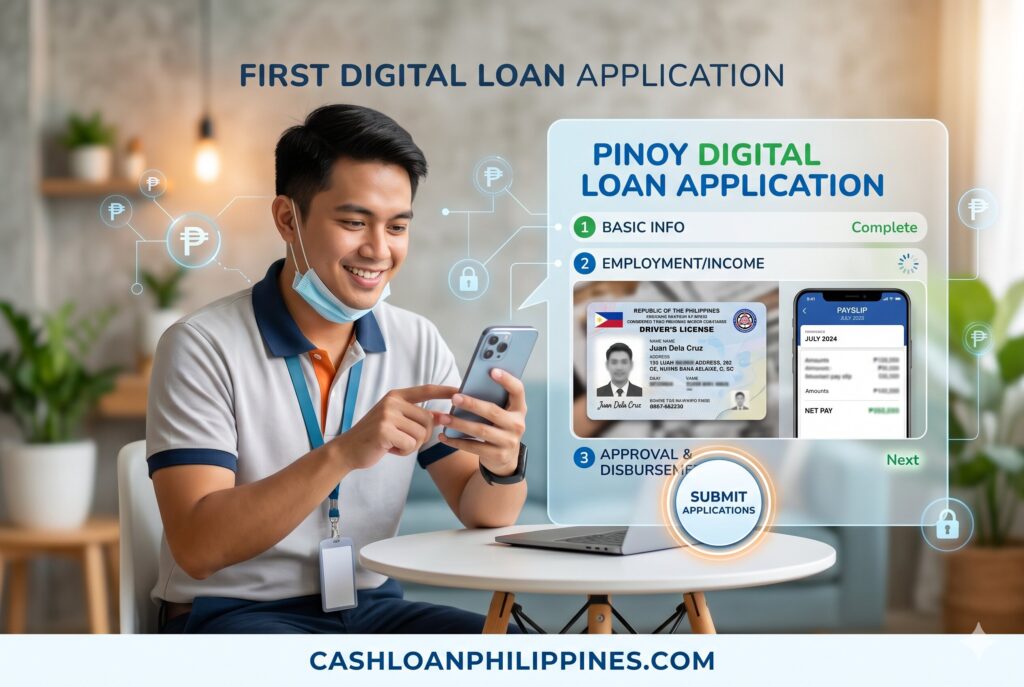
Filipino Young Worker Applying for First Digital Loan
Beginner Mistakes That Frequently Cause Rejections ❌
Many first-time borrower denials are preventable.
Inconsistent Information Across Documents
One of the most common rejection triggers is mismatched details.
Examples include:
- Different spellings of names
- Old addresses
- Incorrect birthdates
- Nicknames instead of legal names
Lenders compare multiple data points automatically.
Even minor inconsistencies can pause verification systems.
Applying to Too Many Apps at Once
Some borrowers panic and submit applications to several lenders simultaneously.
This behavior may appear risky.
Aggressive multi-app applications sometimes resemble fraud or financial distress patterns.
A calmer application pacing strategy is often safer.
Uploading Poor-Quality Documents
Blurry IDs, cropped screenshots, or dark selfie photos frequently cause delays.
Before submitting:
- Clean your camera lens
- Use proper lighting
- Avoid filters
- Ensure text is readable
Clear documentation speeds up onboarding reviews.
What Happens After Loan Approval?
Once approved, funds are usually released through:
- Digital wallets
- Bank accounts
- Partner payout systems
Popular disbursement channels in the Philippines include GCash, Maya, and traditional bank transfers.
What Borrowers Should Expect Immediately After Approval
First-time borrowers often receive:
- Loan contract details
- Repayment schedule
- Interest disclosures
- Due date reminders
Responsible lenders clearly display repayment terms before disbursement.
Borrowers should carefully review:
- Processing fees
- Late payment penalties
- Daily interest computation
- Auto-debit conditions
Never proceed with a loan if repayment terms are unclear.
Why Repayment Behavior Matters So Much
Your first loan creates an early repayment profile.
Successful repayment may help:
- Increase future limits
- Shorten approval times
- Improve lender trust
- Unlock repeat borrower programs
Missed payments can affect future borrowing opportunities across lending ecosystems.
That is why small starter loans are often smarter than borrowing the maximum available amount.
How Students and Young Workers Can Improve Approval Chances 🎓
Students and early-career workers often assume they cannot qualify.
In reality, some lenders evaluate broader financial behavior rather than job seniority alone.
Helpful Preparation Before Applying
Beginners can improve approval chances by:
- Using an active personal SIM card
- Preparing valid identification early
- Maintaining consistent contact details
- Linking active e-wallet accounts
- Borrowing realistic amounts
- Completing every application field carefully
These small details help build borrower trust.
This is also why many educational resources about loan requirements explained focus heavily on preparation quality rather than income size alone.
Alternative Income Can Still Help
Young borrowers earning through side work may still qualify using:
- Freelance projects
- Online selling
- Content creation
- Allowance-supported accounts with regular inflows
- Part-time work
Many fintech lenders now recognize modern income structures beyond traditional office employment.
Borrowers Nervous About App Permissions: What Is Normal?
This is one of the biggest fears among first-time borrowers.
Not all permission requests are automatically dangerous, but caution is important.
Permissions Often Used by Legitimate Lenders
Some regulated apps request access to:
- Camera
- Location
- Device information
- SMS verification
- Phone state
These systems help reduce:
- Identity fraud
- Duplicate applications
- Fake device activity
Red Flags Borrowers Should Watch For
Avoid apps that:
- Demand unnecessary social media access
- Threaten public shaming
- Hide repayment disclosures
- Lack company transparency
- Refuse to explain fees
Borrowers should also verify whether lenders comply with Philippine lending registration requirements and consumer protection expectations.
Legitimate apps prioritize transparent onboarding and repayment communication.
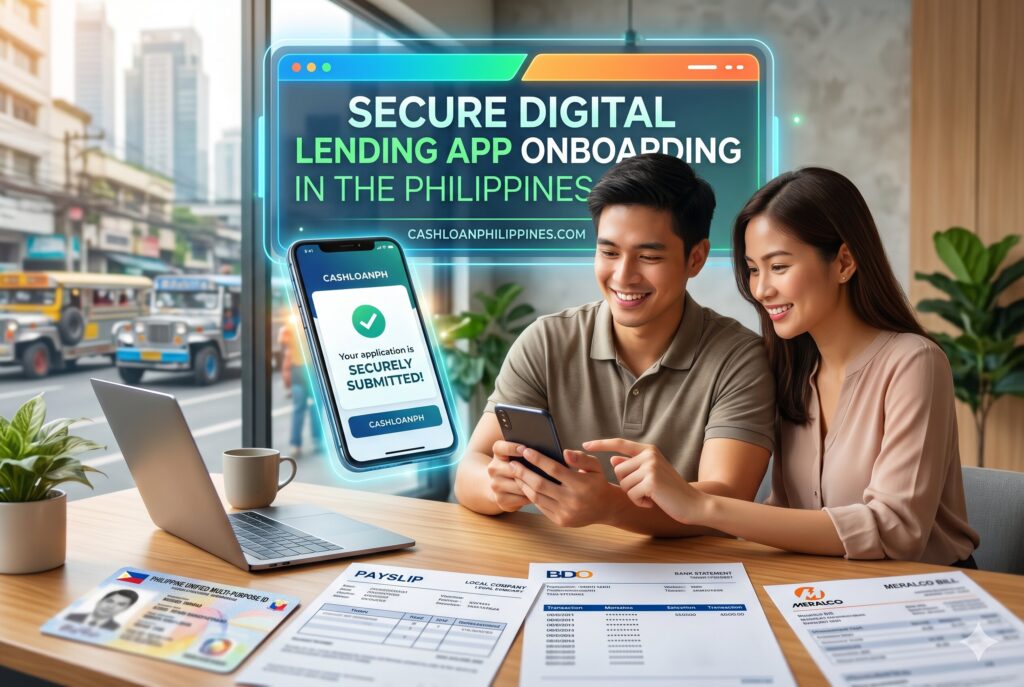
Secure Digital Lending App Onboarding in the Philippines
Practical Ways to Improve Approval Chances Before Applying
Many beginners focus only on income. But lenders often evaluate preparation quality just as heavily.
Build a More Trustworthy Borrower Profile
Helpful habits include:
- Keeping the same phone number active
- Using real personal information consistently
- Maintaining active e-wallet transactions
- Avoiding rushed applications
- Using stable internet and device access
These behaviors strengthen digital trust signals.
Apply During Financial Stability Periods
Lenders also evaluate repayment timing risk.
Applying during periods of:
- Stable work
- Regular income
- Controlled expenses
can improve onboarding confidence.
Borrowers experiencing unstable finances should carefully assess whether borrowing is necessary at that moment.
This practical preparation mindset can naturally improve approval chances without relying on unrealistic shortcuts.
Can First-Time Borrowers Get Approved Easily?
Approval depends on several factors, but beginners absolutely can qualify.
Most lenders look for:
- Real identity verification
- Repayment capacity
- Stable contact details
- Honest applications
- Reasonable loan requests
Borrowers do not need perfect finances to start building lending history.
However, approval is never guaranteed.
Every lender uses different risk models, fraud systems, and borrower scoring methods.
Smaller first loans with responsible repayment behavior usually create stronger long-term borrowing outcomes.
Frequently Asked Questions
Can I apply without a bank account?
Yes. Many Philippine loan apps now disburse funds through digital wallets like GCash or Maya instead of traditional banks.
Will loan apps reject me if I am a freelancer?
Not necessarily. Many lenders accept alternative income proof, especially if your digital transactions show regular earnings activity.
Is a credit score required for first-time borrowers?
Usually not. Many beginner-focused lending apps evaluate identity consistency, financial behavior, and repayment potential instead.
Why do loan apps ask for selfie verification?
Selfie checks help confirm that the applicant matches the submitted ID and reduce identity fraud.
How long do approvals usually take?
Some digital lenders process applications within minutes, while others may require manual verification that takes longer depending on document quality and application volume.
Is borrowing a small amount first better?
Often yes. Smaller first loans may carry lower repayment risk and help establish positive borrowing behavior.
Conclusion
Applying for your first digital loan in the Philippines does not require perfect finances or years of borrowing history. Most fintech lenders now focus on identity verification, profile consistency, repayment potential, and responsible borrower behavior rather than traditional banking status alone.
Beginners who prepare carefully usually experience smoother onboarding. Clear IDs, active mobile numbers, realistic loan amounts, and accurate application details all help strengthen lender confidence.
It is also important to borrow responsibly. A first loan should support manageable financial needs rather than create repayment pressure. Small, well-managed borrowing habits often lead to better long-term financial access and stronger lender trust over time.
Last Updated on September 14, 2026 by Maria Santos
