
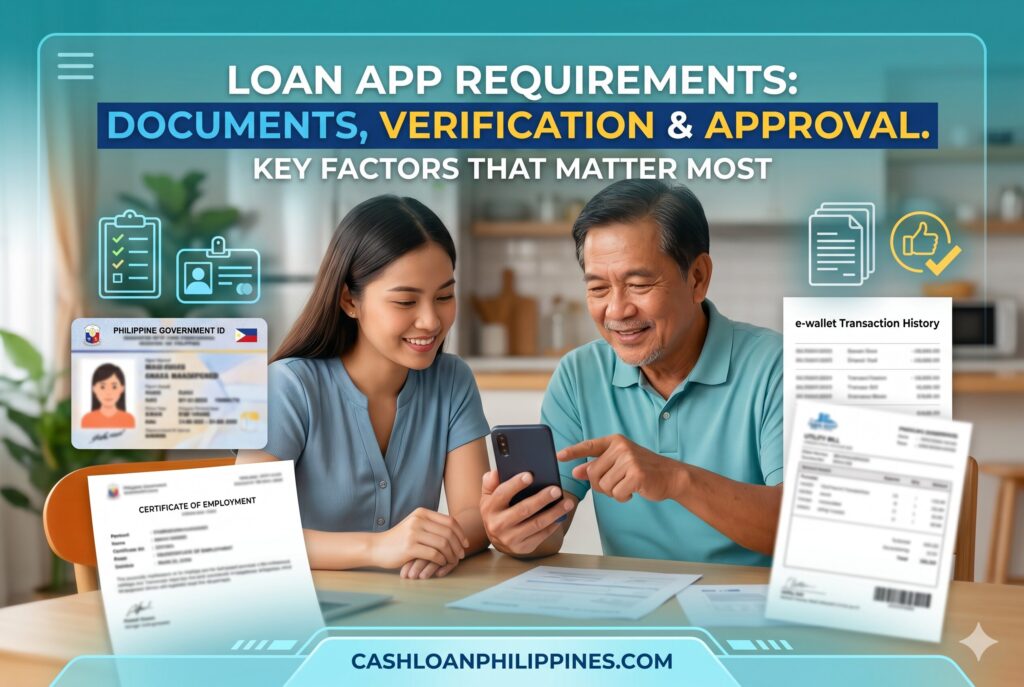
Online lending in the Philippines has become faster, more accessible, and heavily automated. But many borrowers still get rejected because they upload incomplete documents, fail identity checks, use inconsistent information, or misunderstand how digital lending apps evaluate risk.
Whether you are applying through a fintech lending platform, salary loan app, or cash advance app, approval depends on more than simply submitting a valid ID. Most lenders now use layered verification systems involving KYC checks, selfie validation, mobile number analysis, repayment-capacity assessment, device trust signals, and fraud screening tools.
This article explains the full ecosystem behind loan app requirements Philippines, including accepted documents, verification mechanics, approval triggers, common rejection causes, and realistic preparation steps that can improve approval chances before you apply.
Summary:
Loan app requirements in the Philippines usually include a valid government ID, active mobile number, selfie verification, proof of income or cash flow, and a verified bank account or e-wallet such as GCash. Lending apps also evaluate borrower behavior through KYC verification, identity matching, mobile risk analysis, repayment indicators, and application completeness. Approval decisions depend on document quality, consistency of information, device trust, income stability, and fraud detection checks. Borrowers can reduce rejection risk by preparing clear ID photos, using accurate personal details, maintaining active contact numbers, and submitting consistent financial information across all verification stages.
Why Philippine Loan Apps Require So Many Verification Steps 🔍
Digital lending platforms in the Philippines operate under stricter fraud-prevention and identity-validation practices than many borrowers realize. As online scams, synthetic identities, and account takeovers increased, lending apps adapted by strengthening onboarding and verification systems.
Most legitimate lending apps follow internal compliance practices aligned with regulatory expectations from entities like the Bangko Sentral ng Pilipinas and the Securities and Exchange Commission.
Modern verification workflows are designed to confirm:
- The applicant is a real person
- The uploaded ID is authentic
- The borrower can realistically repay
- The mobile device is trustworthy
- The contact information is active
- The application is not duplicated or manipulated
- The borrower profile matches risk criteria
This is why even small loan apps often ask for:
- Selfie verification
- SMS OTP confirmation
- Camera access
- Contact verification
- Employment details
- Banking or e-wallet linkage
- Digital signatures
- Device permissions
These are not random requirements. They feed into automated approval scoring systems.
Core Loan App Requirements in the Philippines
Most lending apps request several categories of borrower information instead of just one document.
Identity Verification Requirements
The first layer is identity validation.
Typical requirements include:
- Full legal name
- Date of birth
- Current address
- Philippine mobile number
- Valid email address
- Government-issued ID
- Selfie verification photo
Many apps cross-check these details automatically. If your application contains spelling inconsistencies, mismatched birthdays, or address discrepancies, approval risk increases immediately.
Financial Verification Requirements
Lenders also need indicators of repayment capacity.
Depending on the app, they may request:
- Payslips
- Bank statements
- Payroll account records
- Proof of remittances
- Online wallet transaction history
- Business permits
- Freelance invoices
- Commission statements
Some apps market themselves as offering loan apps without payslip requirements, but this usually means they use alternative cash-flow analysis instead of traditional employment proof.
For example, apps may analyze:
- E-wallet usage
- Bank inflow patterns
- Mobile spending behavior
- Recurring deposits
- Account longevity
Valid IDs Accepted by Most Philippine Loan Apps 🪪
One of the biggest approval blockers is submitting an ID that the app cannot validate properly.
Commonly Accepted Government IDs
Many apps accept these IDs:
| Accepted ID Type | Common Approval Reliability |
|---|---|
| PhilSys National ID | High |
| UMID | High |
| Passport | High |
| Driver’s License | High |
| PRC ID | High |
| Voter’s ID (limited acceptance) | Medium |
| Postal ID | Medium |
| SSS ID | Medium-High |
| TIN ID | Low-Medium |
The most important factor is not just the ID type but the image quality and data readability.
This becomes especially relevant when borrowers search for valid IDs accepted by loan apps because acceptance policies vary between lenders.
Why Blurry IDs Cause Rejections
Automated OCR and facial-recognition systems scan uploaded documents.
Common rejection triggers include:
- Cropped edges
- Finger covering text
- Reflection glare
- Expired IDs
- Low camera resolution
- Edited images
- Screenshot uploads
- Mismatched names
If OCR cannot extract the text cleanly, the verification engine may reject the application automatically before manual review even starts.
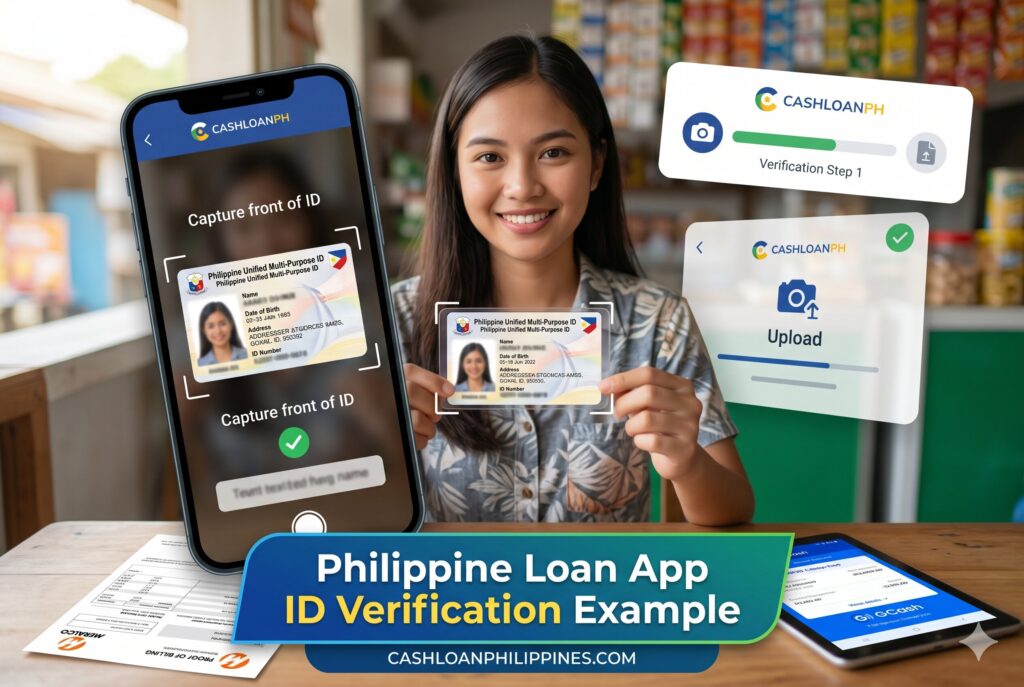
Philippine Loan App ID Verification Example
Why Selfie Verification Matters More Than Borrowers Think 📸
Many applicants ask why lending apps require live selfies or facial scans.
Selfie Verification Prevents Identity Fraud
Selfie verification helps apps confirm:
- The borrower matches the ID photo
- The applicant is physically present
- The image is not stolen
- The account is not synthetic or AI-generated
Modern fintech systems use liveness detection tools that analyze:
- Eye movement
- Facial depth
- Head motion
- Light reflection
- Camera authenticity
This explains why searches related to why selfie verification fails have increased in the Philippines.
Common Reasons Selfie Verification Gets Rejected
Applications frequently fail because of:
- Wearing hats or sunglasses
- Poor lighting
- Face partially hidden
- Low-quality front camera
- Filtered images
- Heavy blur
- Camera permission errors
Another major issue is mismatch between selfie appearance and ID photo, especially if the ID is very old.
Borrowers using aging IDs with outdated photos often experience repeated verification loops.
Mobile Number Verification Rules and Device Checks 📱
Loan apps heavily depend on mobile trust signals.
Why Your Mobile Number Matters
Most apps require:
- Active SIM registration
- OTP confirmation
- Stable mobile usage history
- Consistent device association
This is central to modern phone number verification rules used by fintech lenders.
Apps may flag applications when:
- SIM cards are newly activated
- Numbers are recycled frequently
- Multiple accounts use one device
- VPN usage is detected
- Device identifiers change often
Device Risk Analysis Is Increasing
Many borrowers do not realize apps analyze mobile-device behavior for fraud prevention.
Signals may include:
- Rooted phones
- Emulator detection
- Suspicious app overlays
- Device reputation
- Location inconsistencies
- Multiple failed login attempts
Some lenders also assess whether the device appears linked to previously rejected or delinquent accounts.
How Loan Apps Evaluate Borrower Risk Behind the Scenes
Approval decisions are now largely automated.
KYC Verification and Borrower Profiling
KYC stands for Know Your Customer.
In digital lending, KYC workflows may involve:
- Identity authentication
- Facial matching
- Address consistency
- Contact verification
- Financial pattern analysis
- Fraud database screening
Apps build borrower profiles using multiple data points simultaneously.
The final decision often depends on the total consistency of the application rather than one single requirement.
Approval Scoring Factors
Many applicants assume income alone determines approval.
In reality, lending systems may also evaluate:
- Application completeness
- Employment stability
- E-wallet activity
- Existing debts
- Borrowing history
- Device trust
- Payment behavior
- Contact reliability
- Frequency of applications
This is why borrowers researching how to improve loan app approval chances should focus on accuracy and consistency rather than uploading excessive documents.
Employment Type Changes Requirement Expectations 💼
Different borrower categories are evaluated differently.
Employed Applicants
Traditional employees typically provide:
- Company ID
- Payslips
- Payroll accounts
- Certificate of employment
Approval tends to be smoother when payroll deposits show stable monthly income.
Freelancers and Gig Workers
Freelancers often face higher verification scrutiny because income patterns are irregular.
Apps may instead request:
- Bank transaction history
- Client invoices
- Online platform earnings
- Remittance records
- E-wallet cash flow
This matters for applicants searching for loan apps without payslip requirements because many freelance borrowers qualify through alternative income verification instead.
Self-Employed Borrowers
Business owners may need:
- Business permits
- DTI registration
- Bank statements
- Sales records
- Tax filings
Apps prefer evidence of recurring business activity rather than one-time deposits.
What First-Time Borrowers Should Prepare Before Applying 🚀
Many first-time applicants get rejected due to avoidable preparation mistakes.
Essential Preparation Checklist
Borrowers should prepare:
- Clear front and back ID photos
- Stable mobile number
- Accurate address details
- Working email address
- Consistent employment information
- Active bank account or e-wallet
- Proper lighting for selfie capture
This is especially important for searches related to requirements for first-time borrowers.
Why Consistency Matters Across All Fields
A common rejection pattern happens when:
- The ID address differs from the application address
- Employment dates conflict
- Nicknames are used inconsistently
- Contact references are invalid
- Email names do not match the borrower
Automated systems treat inconsistencies as fraud-risk indicators.
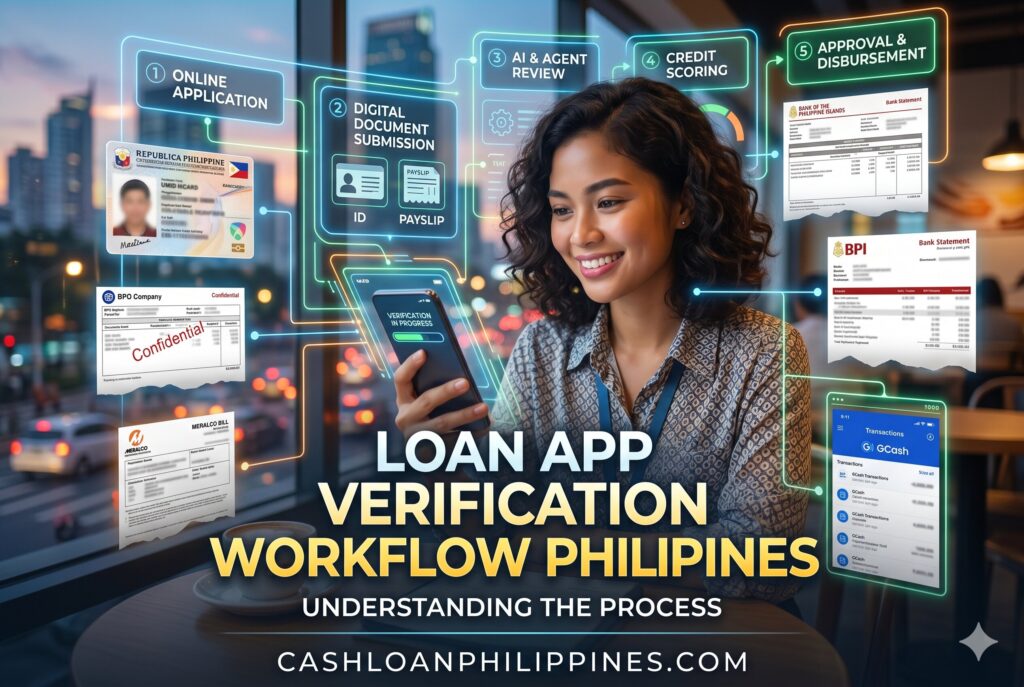
Loan App Verification Workflow Philippines
E-Wallet Verification and GCash Disbursement Rules 💸
Many Philippine loan apps now use e-wallets for loan disbursement.
Why GCash and E-Wallets Are Popular
E-wallets allow:
- Faster disbursement
- Easier repayment
- Digital identity linkage
- Lower operational costs
Borrowers using GCash usually need:
- Fully verified wallet accounts
- Matching account names
- Active mobile numbers
- Transaction-ready wallets
Common E-Wallet Verification Problems
Approval or disbursement delays may occur if:
- The wallet is unverified
- Names do not match the ID
- The account is inactive
- The number differs from the registered application number
Some apps reject applications entirely if the e-wallet ownership cannot be validated.
The Real Reasons Loan Apps Reject Applications ❌
Many rejections happen before human review.
High-Frequency Rejection Triggers
Common rejection causes include:
- Blurry ID uploads
- Failed selfie checks
- Inconsistent information
- Suspicious device activity
- Low repayment indicators
- Duplicate applications
- Inactive phone numbers
- Disposable email usage
Borrowers searching for reasons loan apps reject applications often underestimate how much automation affects outcomes.
Application Timing Can Also Matter
Some apps temporarily tighten approval rules during:
- High default periods
- Fraud spikes
- Promotional campaigns
- Internal risk recalibration
This explains why one borrower may qualify one month and fail the next despite similar income levels.
How Long Approval Takes After Document Upload ⏳
Approval speed depends on verification complexity.
Fast Approvals vs Manual Reviews
Applications may be approved within minutes if:
- IDs scan correctly
- Selfie verification passes immediately
- Data matches automatically
- Device risk is low
- Income indicators are sufficient
Manual review becomes more likely when:
- Images are unclear
- Information conflicts exist
- Fraud-risk triggers appear
- Alternative income verification is needed
Why Some “Instant Approval” Claims Are Misleading
Even apps advertising instant loans still perform backend verification.
The real difference is whether the app uses:
- Fully automated approval
- Hybrid human review
- Manual underwriting
Borrowers with clean digital verification trails usually experience faster approvals.
Practical Ways to Improve Approval Chances ✔️
Small preparation improvements can significantly reduce rejection risk.
Before Uploading Documents
Always:
- Clean your camera lens
- Use natural lighting
- Avoid screenshots
- Capture uncropped IDs
- Double-check spelling
- Use matching legal names
Before Submitting the Application
Review:
- Address consistency
- Contact information
- Employment details
- E-wallet ownership
- Mobile number activity
These actions align directly with strategies related to how to improve loan app approval chances.
Avoid Multiple Simultaneous Applications
Submitting many applications quickly may trigger:
- Fraud alerts
- Credit-risk flags
- Device-risk escalation
Some lenders interpret aggressive multi-app behavior as financial distress.
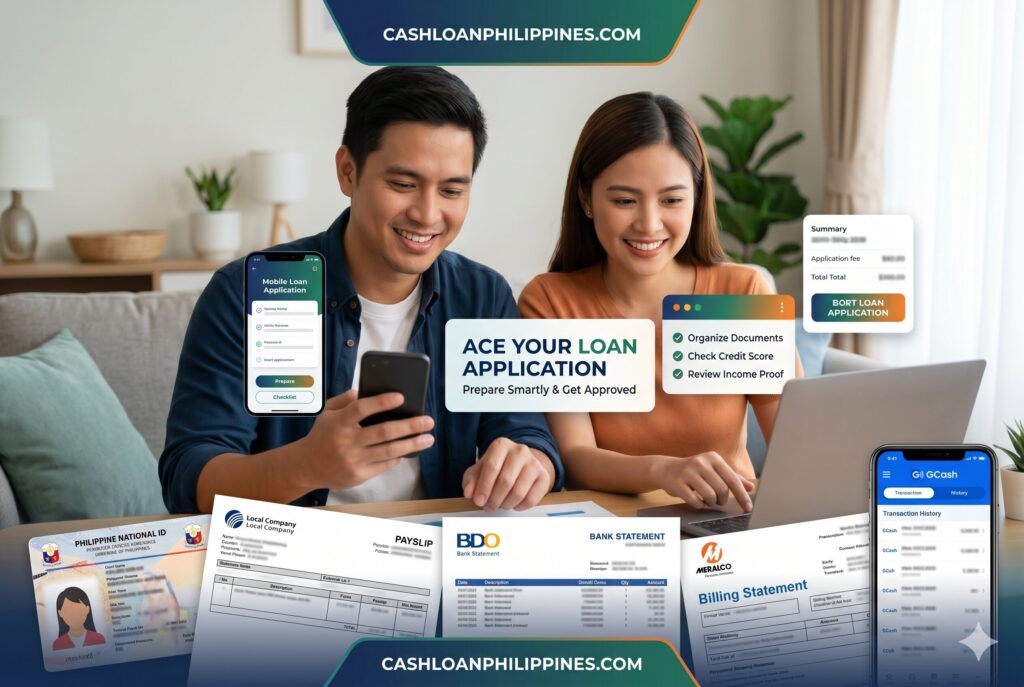
Best Practices for Loan App Approval Preparation
BSP and SEC Awareness Matters for Borrower Safety 🛡️
Borrowers should also evaluate whether a lending platform operates responsibly.
What Legitimate Lending Apps Usually Show
Responsible apps commonly display:
- SEC registration information
- Transparent repayment terms
- Privacy disclosures
- Customer-service channels
- Data-processing consent
Warning Signs of Risky Apps
Borrowers should be cautious if apps:
- Demand excessive phone access
- Threaten borrowers aggressively
- Hide fee structures
- Lack company transparency
- Use abusive collection tactics
The Philippine digital lending ecosystem has evolved significantly, but borrower awareness remains essential.
Frequently Asked Questions
What IDs do loan apps accept in the Philippines?
Most apps accept government-issued IDs such as the PhilSys National ID, passport, UMID, driver’s license, and PRC ID. Acceptance depends on image clarity, expiration status, and successful OCR validation.
Why do apps ask for selfie verification?
Selfie verification helps confirm that the borrower matches the uploaded ID and is physically present during application. It also supports fraud prevention and liveness detection systems.
Can I apply without a payslip?
Yes. Some apps allow alternative income verification using bank statements, e-wallet activity, freelance invoices, remittance records, or transaction history.
Why was my verification rejected?
Common reasons include blurry IDs, inconsistent information, poor selfie quality, expired documents, inactive mobile numbers, or suspicious device behavior.
How long does approval take after document upload?
Approvals may happen within minutes for low-risk applications with complete and accurate verification. Applications needing manual review can take several hours or longer.
Can I use GCash for loan disbursement?
Yes. Many lending apps support GCash and other e-wallets, but the wallet usually needs full verification and matching account details.
Conclusion
Loan app approval in the Philippines now depends on a full digital verification ecosystem rather than a single document upload. Lending apps evaluate identity consistency, repayment indicators, mobile trust signals, selfie validation, e-wallet ownership, and borrower behavior patterns simultaneously.
Borrowers who prepare clear documents, maintain accurate information, and use stable mobile and financial accounts generally experience smoother verification outcomes. Small mistakes – such as blurry IDs, mismatched names, or inactive contact details – can trigger automated rejection systems before manual review even begins.
Responsible borrowing also matters. Before submitting any application, verify that the lender operates transparently, review repayment obligations carefully, and avoid borrowing beyond realistic repayment capacity. Strong preparation improves approval potential while helping borrowers navigate the Philippine digital lending ecosystem more safely and confidently.
Last Updated on September 6, 2026 by Maria Santos
