

When a financial emergency strikes, borrowers immediately look for a fast approval online loan in the Philippines. However, a major misconception persists in the digital lending ecosystem: applicants assume human agents are sitting in an office, reading their submitted forms, and deciding their creditworthiness. The reality of modern Philippine fintech is entirely different. Decisions are made in milliseconds by machine learning algorithms designed to assess risk, process metadata, and execute automated underwriting.
If your application takes longer than a few minutes, you have failed the automated checks and have been dropped into a manual review queue. By aligning your application data with exactly what these algorithms want to see, you can entirely bypass human intervention. This analytical breakdown details how alternative credit scoring metrics, device metadata, and behavioral biometrics dictate the fate of your application, ensuring you secure immediate disbursement.
Summary:
To guarantee instant approval for a fast approval online loan in the Philippines, applicants must bypass manual agent review by optimizing their digital footprint for algorithmic underwriting. Fintech systems utilize alternative credit scoring, assessing device metadata like battery levels, contact list density, and typing speed to verify identity. By submitting flawless OCR-readable IDs, linking aged social media accounts, and avoiding erratic behavioral biometrics, borrowers can prevent fraud flags. Structuring your application to satisfy these automated trust signals ensures instantaneous disbursement without delays.
Algorithmic Verification vs. Manual Review
| Evaluation Criteria | Automated Instant Approval (Disbursement in Minutes) | Manual Review Queue (Delayed or Pending) |
| ID Verification Quality | High-contrast PhilSys ID, 100% OCR text extraction match | Blurry UMID or TIN ID, heavy glare masking details |
| Device Metadata | Normal battery drain, high storage use, dense contact list | Factory reset device, 0% battery, empty contact list |
| Digital Social Footprint | Linked 5-year-old active Facebook or LinkedIn account | No social accounts linked, or newly created profiles |
| Typing Behavior | Steady, manual data entry at a consistent speed | Rapid copy-pasting of personal details, erratic corrections |
How do lending algorithms decide my approval status instantly?
Lending algorithms decide approval instantly by analyzing alternative credit scoring data, device metadata, and behavioral biometrics. These automated systems bypass human agents by checking digital footprints to instantly assess your repayment capacity and fraud risk.
In the highly saturated Philippine fintech market, lenders process tens of thousands of applications daily. Scaling this operation requires removing humans from the initial decision matrix. When you hit the submit button, the platform’s backend communicates with Application Programming Interfaces (APIs) linked to the Credit Information Corporation (CIC), telco providers, and internal proprietary risk models. The algorithm calculates a confidence score based on the data points scraped from your mobile device. If that score crosses a specific threshold, the smart contract triggers an automated fund transfer directly to your designated e-wallet or bank account.
What is alternative credit scoring and how does it replace traditional bank checks?
Alternative credit scoring evaluates non-traditional data like e-wallet transactions, telco usage, and utility payments instead of traditional bank histories. This allows fintechs to approve unbanked Filipinos quickly by predicting creditworthiness through everyday digital behaviors.
Traditional banking relies on credit cards and structured loan histories. However, a massive portion of the Philippine population remains unbanked or underbanked. To bridge this gap, SEC-registered lending platforms have developed sophisticated alternative credit models. Instead of looking for a pristine bank ledger, these systems analyze how consistently you top up your Maya or GCash wallets, how regularly you pay your Meralco bills through digital channels, and the tenure of your mobile network subscription. Frequent, low-value digital transactions signal a stable cash flow, allowing the algorithm to assign a positive credit tier without ever seeing a formal payslip or an income tax return.
How do lending apps use my device metadata for instant decisions?
Lending apps analyze device metadata such as contact list density, current battery level, and GPS location consistency to verify your identity. A phone with thousands of contacts and regular charging patterns signals a legitimate, primary user rather than a burner device.
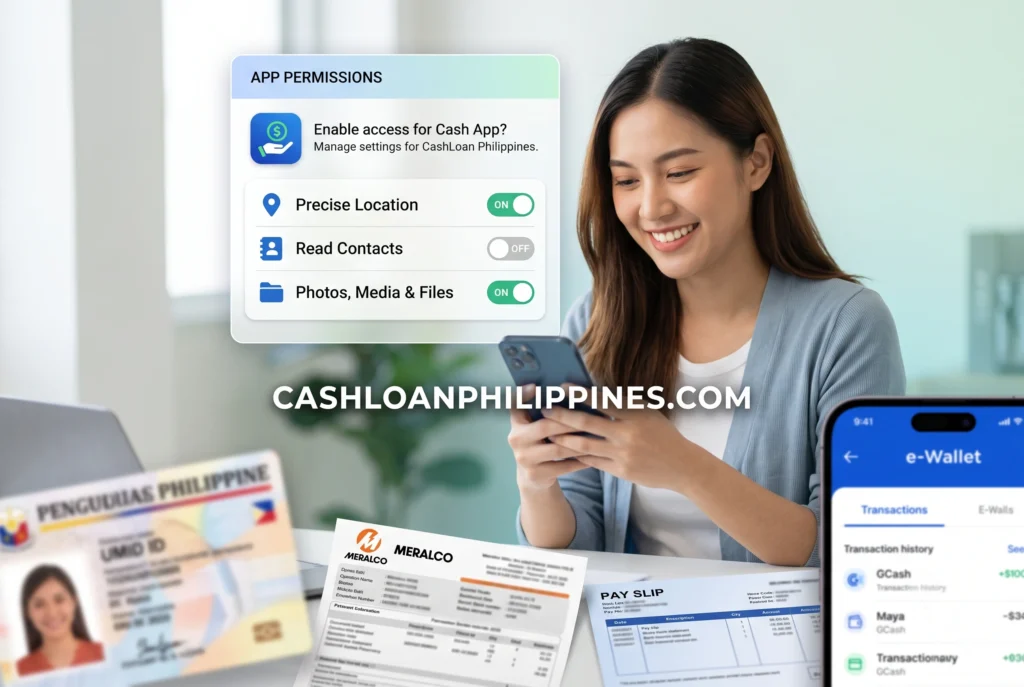
When you grant a lending app permissions upon installation, you are allowing the algorithm to read the behavioral history of the hardware itself. Device fingerprinting is a massive component of automated fraud prevention. Fraud rings often use factory-reset phones to submit hundreds of fake applications. To combat this, the algorithm checks the physical state of the phone. Does the device have a healthy mix of old and new photos? Is the storage capacity partially filled? Does the GPS ping consistently align with the declared home address? If a phone is operating on 5% battery with zero saved contacts and a completely empty camera roll, the system instantly flags it as a high-risk burner device.
How should I fill out my online loan application process to bypass manual review?
To bypass manual review during the online loan application process, you must submit flawless OCR-readable IDs, authorize secure app permissions, and input data steadily. Preventing any algorithmic red flags ensures the system automatically greenlights your disbursement without human intervention.
Borrowers often assume that writing a lengthy, emotional explanation for why they need the money will help their case. Machine learning algorithms do not read or care about personal notes. They only process structured data. Your primary goal is to make the data ingestion as frictionless as possible. Ensure your network connection is stable during the upload phase so data packets are not corrupted, grant the necessary system permissions right away, and present data exactly as it appears on your government documents to prevent automated mismatch triggers.
Why does linking my Facebook or LinkedIn account speed up my loan approval?
Linking your Facebook or LinkedIn account provides algorithms with a verifiable digital footprint showing account age and consistent social activity. This proves you are a real person with established social ties, significantly lowering your assigned fraud risk score.
Identity synthesis is a major threat in digital finance. Fraudsters frequently stitch together stolen IDs with fake names to create synthetic identities. To counteract this, fintech platforms heavily weight the age and activity of social media profiles. An application from an individual who links a Facebook account created in 2014, complete with years of tagged photos and geographical check-ins around Metro Manila, proves authentic human existence. The algorithm scrapes basic public metadata from the linked profile to corroborate the name, age, and location provided in the application. Newly created social profiles, conversely, add negative weight to the overall risk score.
How does my typing speed and digital footprint affect automated underwriting?
Automated underwriting tracks your typing speed and behavioral biometrics to detect fraudulent activity like copy-pasting personal details. Natural, steady typing indicates you know your own information, whereas erratic input triggers high-risk alerts.
Behavioral biometrics track how you interact with the interface, not just what you type. The software monitors the accelerometer in your phone to see if you are holding it at a natural angle. It tracks the cadence of your keystrokes. A legitimate applicant typing out their own home address and mother’s maiden name does so with a natural, human rhythm. Fraudsters working from spreadsheets copy and paste data fields in milliseconds. If the algorithm detects that your name, address, and ID number were pasted into the application rather than typed, it will immediately halt the automated approval and route the file to a fraud investigator.
Why is my online loan still pending review instead of getting instant approval?
Your loan remains pending because the automated system detected anomalies like a blurry ID scan, mismatched selfie biometrics, or conflicting location data. These triggers force the algorithm to route your file to a human agent for manual verification, delaying disbursement.
When an application is stuck in a “Processing” or “Pending Review” status, it simply means the AI failed to reach a 100% confidence threshold. The system acts conservatively; if it cannot perfectly read a piece of data, it will not approve the funds. In the Philippine context, human agents work normal business hours. If you submit a flagged application at 2:00 AM, it will sit in a queue until an agent clocks in at 8:00 AM, completely ruining the 24-hour instant approval promise.
What specific ID and selfie mistakes force an application into manual agent review?
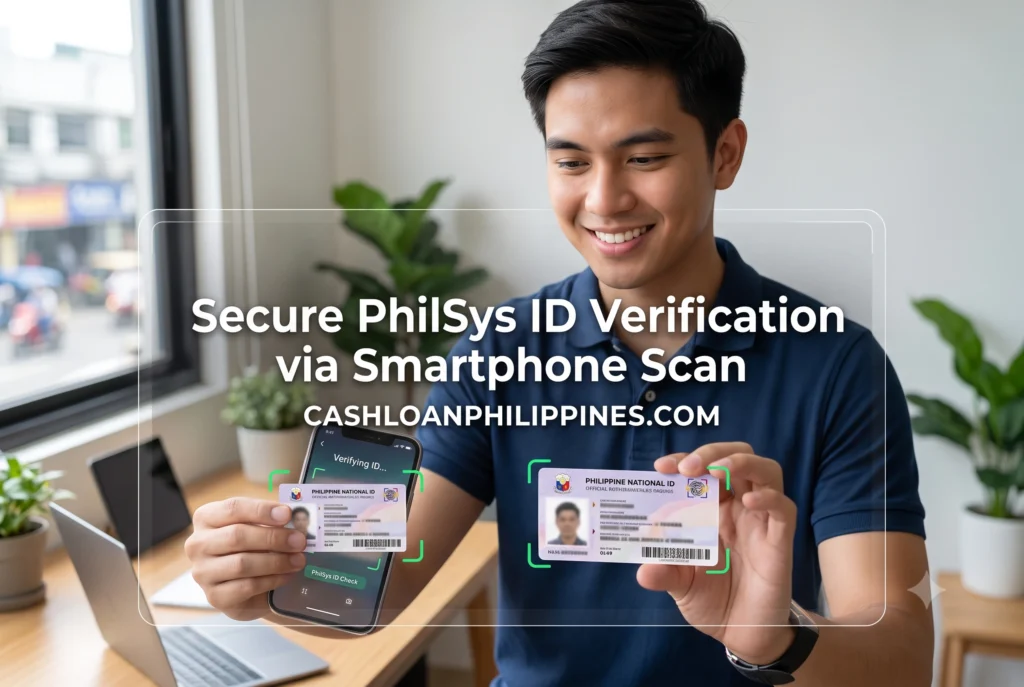
Using a faded UMID card or taking a selfie with heavy background glare forces the optical character recognition (OCR) system to fail. When the AI cannot read the text clearly, the application immediately drops out of the instant approval queue.
Fintech platforms like JuanHand or Tala utilize highly sensitive OCR technology. The National ID (PhilSys) is the gold standard for instant approval because it features high-contrast text, standardized fonts, and easily scannable QR codes. Conversely, older documents like a battered TIN ID or a faded Postal ID lack machine-readable zones. Furthermore, when taking the required liveness selfie, borrowers often stand in front of bright windows. Backlighting turns the face into a silhouette, causing the facial recognition software to fail the biometric comparison against the uploaded ID.
Are there times when a medical emergency application gets flagged by the system?
A borrower rushing to pay a hospital bill often makes rapid, frantic typing errors or captures poorly lit IDs, triggering automated fraud filters. Algorithms cannot detect human emergencies; they only read data inputs, so rushing actually guarantees a slower manual review.
The stress of needing immediate funds often causes applicants to behave erratically. An applicant pacing around a hospital waiting room might trigger the phone’s gyroscope wildly, drop the internet connection while moving between cellular towers, or submit an ID photo shadowed by harsh hospital lighting. The algorithm interprets these chaotic inputs as anomalous behavior. To ensure the fastest possible payout, borrowers must pause, find a well-lit, quiet area, connect to a stable network, and process the application with deliberate precision.
What are the exact algorithmic reasons why applications get rejected instantly?
Applications face instant rejection when systems detect burner phones, newly registered SIM cards, or manipulated device environments like VPNs. Knowing exactly why applications get rejected is crucial because these automated safety nets permanently lock out profiles flagged for severe fraud risk.
There is a distinct difference between a pending application and an instant rejection. A pending status implies the data is unreadable; a rejection means the data is actively hostile. Lenders adhere to strict anti-money laundering (AML) and know-your-customer (KYC) regulations dictated by the Bangko Sentral ng Pilipinas (BSP). If the algorithm detects active deception – such as a user trying to mask their location or spoof their device identity – the application is immediately denied, and the applicant’s details are often blacklisted across partnered financial networks.
How does contact list density and battery level influence behavioral biometrics?
A suspiciously low contact list density or a device constantly running on critical battery flags the phone as a temporary or fraudulent device. Genuine users have hundreds of saved numbers and natural charging cycles, which the algorithm verifies.
Legitimate smartphones contain rich historical data. When a borrower allows an app to assess their contact list, the algorithm looks for depth and variety. A phone with only five contacts, all saved on the same day, is a massive red flag. Similarly, algorithms monitor battery health and charging habits. Emulators running on desktop computers (a common tool for mass-submitting loan applications) often report a static 100% battery level at all times. By checking these minor hardware details, lenders filter out non-human applications instantly.
Why do inactive mobile numbers or newly registered SIM cards trigger fraud alerts?
Newly registered SIM cards lack the historical telco usage data required to verify a borrower’s long-term identity and physical location. Because of the SIM Registration Act, algorithms now cross-reference mobile number tenure to filter out immediate default risks.
Your mobile number is the anchor of your digital identity. Lenders partner with telcos like Globe and Smart to verify the tenure of a mobile number. A SIM card that has been active, regularly loaded with prepaid credits, and consistently pinging towers in a specific residential zone for three years provides immense security to a lender. A SIM card registered yesterday has zero data history. Because bad actors frequently buy new SIMs to apply for loans they never intend to repay, algorithms automatically assign the highest risk scores to fresh numbers, resulting in instant denial.
Conclusion
Securing instant disbursement requires shifting your perspective from human-centric pleading to data-centric precision. Algorithms do not judge your character; they measure your digital footprint. By providing flawless ID scans, utilizing aged social media accounts, applying with long-tenured mobile numbers, and typing your information organically, you provide the machine with exactly what it needs to authorize your funds. Practice responsible borrowing by ensuring you only apply for amounts you can comfortably repay, and always deal exclusively with platforms regulated by the SEC and BSP to protect your sensitive data.
References
- Bangko Sentral ng PilipinasOrganization: BSPResource: Financial Consumer Protection FrameworkURL: https://www.bsp.gov.ph/
- Securities and Exchange Commission PhilippinesOrganization: SEC PhilippinesResource: List of Registered Online Lending PlatformsURL: https://www.sec.gov.ph/
- National Privacy CommissionOrganization: NPCResource: Data Privacy Guidelines for Online Lending ApplicationsURL: https://www.privacy.gov.ph/
- Credit Information CorporationOrganization: CICResource: Alternative Credit Scoring and Financial InclusionURL: https://www.creditinfo.gov.ph/
Last Updated on October 6, 2026 by Maria Santos
