
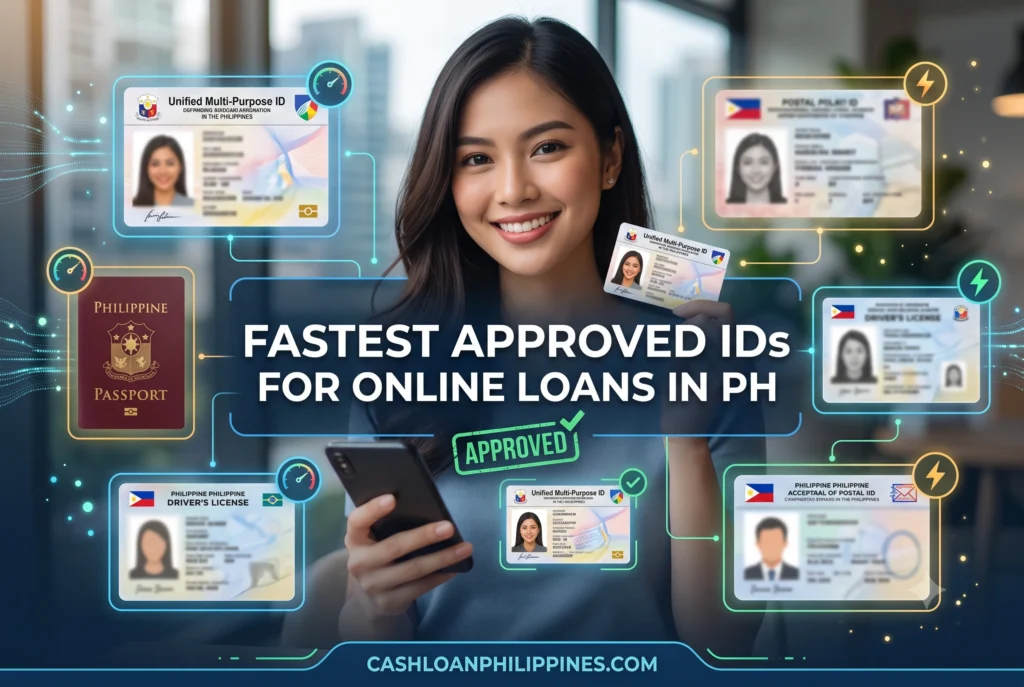
The Philippine digital lending sector has transitioned entirely from manual underwriting to automated processing. As a fintech analyst observing the ecosystem’s evolution, the most significant bottleneck borrowers face today is failing the initial digital onboarding phase due to document rejection.
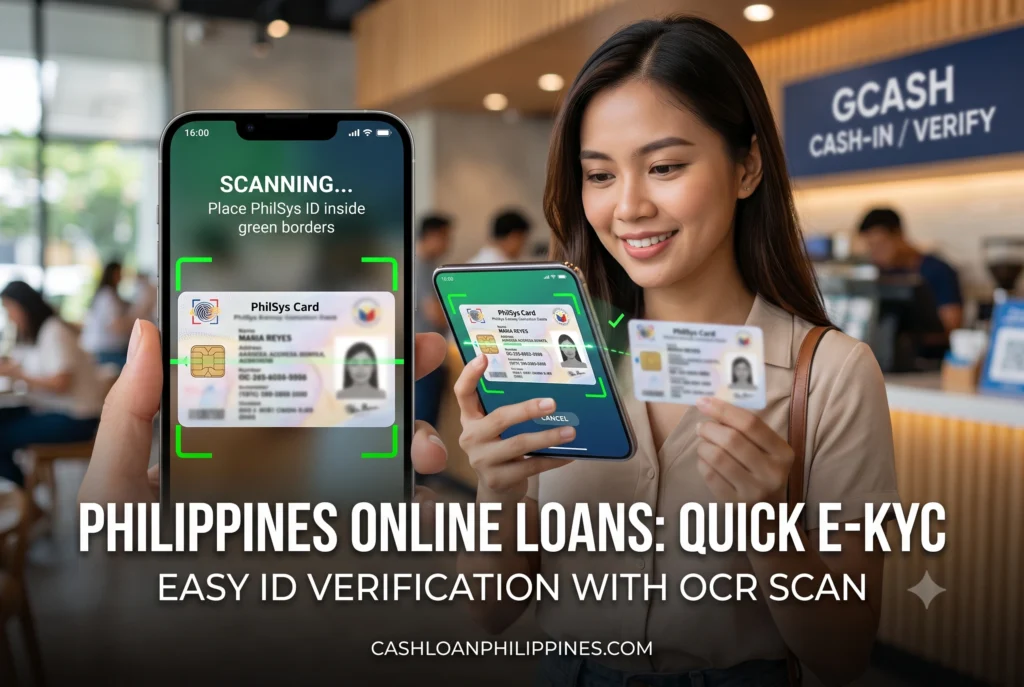
Platforms rely heavily on Electronic Know Your Customer (E-KYC) systems. These systems utilize Optical Character Recognition (OCR) and biometric liveness detection to verify identities in milliseconds. If your document cannot be parsed by the algorithm, your application drops out of the automated approval pipeline and falls into a manual review queue – or faces outright rejection. Securing consumer credit efficiently requires knowing exactly which documents trigger instant approvals and which ones flag the system for potential fraud.
Summary:
To secure fast approval for a valid id for online loan philippines, borrowers must submit high-tier, machine-readable documents like the PhilSys ID, UMID, Passport, or Driver’s License. These primary IDs feature standardized barcodes and distinct laminations that pass E-KYC Optical Character Recognition (OCR) instantly. Secondary documents like TIN or PhilHealth IDs often trigger manual review due to the absence of advanced security features. For a seamless application, ensure your ID is free of glare, use natural lighting for the biometric liveness selfie, and provide alternative digital statements if standard proof of billing is unavailable.
Verification Document Tier List for Digital Lenders
| Document Category | Examples | OCR Processing Speed | System Approval Probability |
| Primary (Machine-Readable) | PhilSys ID, Passport, UMID, Driver’s License | < 5 seconds | High (Automated pipeline) |
| Secondary (Basic Visual) | TIN ID, PhilHealth, Postal ID | 12 – 48 hours | Medium (Manual review required) |
| Alternative/Niche | Valid Student ID, Company ID | Highly variable | Low (Depends on specific lender) |
| Income/Billing Substitutes | E-wallet history, Barangay Certificate | 1 – 3 hours | Medium-High (Risk-based assessment) |
What are the primary valid IDs accepted by Philippine loan apps?
Primary valid IDs for online loans include the PhilSys ID, UMID, Passport, Driver’s License, and PRC ID. These documents feature high-contrast text and standardized barcodes that allow automated e-KYC systems to verify borrower identities within seconds.
Why do e-KYC systems prefer the PhilSys ID, UMID, and Passport?
Automated lending platforms prioritize the PhilSys National ID, Unified Multi-Purpose ID (UMID), and the Philippine Passport because they are engineered for machine readability. The PhilSys ID incorporates a QR code that directly links to the national registry, allowing the fintech application’s backend API to ping the government database for an instant match.
Similarly, the Philippine Passport contains a Machine Readable Zone (MRZ) at the bottom of the data page. When you scan a passport, the OCR algorithm does not just read the text; it decrypts the MRZ characters to validate the expiration date, birth date, and document number simultaneously. UMID cards possess a uniform polyvinyl chloride (PVC) surface that reflects light predictably, reducing the exact glare patterns that confuse mobile camera lenses. Lenders categorize these as low-risk documents, which pushes your application straight through the automated decision engine without human intervention.
Does a Driver’s License or PRC ID guarantee faster OCR scanning?
Yes, submitting a valid Driver’s License or Professional Regulation Commission (PRC) ID significantly reduces data extraction errors. Both documents follow strict typographical standards. The fonts utilized on the Land Transportation Office (LTO) driver’s license are heavily optimized for optical scanners.
From an operational risk perspective, a borrower holding a PRC ID or a Driver’s License signals stable employment or mobility, effectively lowering their credit risk profile. However, borrowers frequently make the mistake of scanning the temporary paper driver’s license receipts (Official Receipt/Certificate of Registration). E-KYC systems are programmed to reject paper receipts because they lack biometric photos and standardized placement of text, making automated data extraction impossible. You must use the physical plastic card to benefit from the automated fast track.
Can I use secondary IDs if I lack primary government documents?
Yes, but secondary IDs like TIN, PhilHealth, or Postal IDs often trigger manual review instead of instant approval. Lenders assign higher fraud risk to these cards because they lack advanced biometric features or uniform laminations.
Can I use a PhilHealth ID or TIN ID for an online loan?
Many borrowers attempt to use their PhilHealth or Tax Identification Number (TIN) IDs when applying for credit. While legally valid documents, they present massive operational friction for digital lenders. Both the PhilHealth and TIN cards are essentially cardboard or basic paper stock sealed in generic plastic lamination.
Because the layout, font size, and photo placement on these cards vary depending on which local branch issued them, OCR systems fail to map the data fields accurately. A human credit analyst must manually verify the name, picture, and number. This transitions your application from a five-minute approval to a 24-to-48-hour waiting period. If you must use a PhilHealth ID, ensure the laminate is completely flat; any warping will distort the text underneath, leading to an automatic system rejection.
Will digital lenders accept a Postal ID or a student ID?
The acceptance of Postal IDs fluctuates based on regulatory directives and the specific risk appetite of the fintech firm. Newer, biometrically captured Postal IDs possess better security features and are widely accepted by platforms like Maya or GCash. Older versions are frequently rejected.
A frequent friction point involves younger demographics attempting to utilize a school ID. Standard consumer lending platforms explicitly reject student IDs because minors cannot legally enter into binding financial contracts. However, niche educational technology lenders operating in the Philippines will accept university IDs, provided they are validated alongside a guardian’s consent form and a current registration form.
How do you pass the selfie and facial recognition liveness test?
You must ensure even lighting and remove glasses so the app’s liveness detection algorithm can map your facial topography against your ID photo. Selfie verification prevents identity theft by proving the actual borrower is holding the device.
Why does the loan app need a selfie with my ID?
Consumer protection and anti-fraud protocols mandate liveness detection. In the early days of Philippine fintech, fraudsters would hold up printed photographs of stolen IDs to the camera to secure fraudulent credit. Modern applications now deploy active liveness detection.
When the app prompts you to blink, turn your head, or smile, it is measuring three-dimensional facial depth and micro-movements that a static photograph or a tablet screen cannot replicate. Furthermore, the system performs a biometric vector comparison between the real-time selfie and the photograph extracted from your submitted ID. If the algorithmic confidence score falls below 85%, the application is halted. Removing accessories like heavy makeup, face masks, or thick-rimmed glasses ensures the system accurately plots the distance between your eyes and the bridge of your nose.
What should you do if your physical ID is slightly damaged but scannable?
Borrowers frequently abandon applications when their physical ID is faded, scratched, or slightly bent. E-KYC systems are surprisingly resilient if you manipulate the environmental variables.
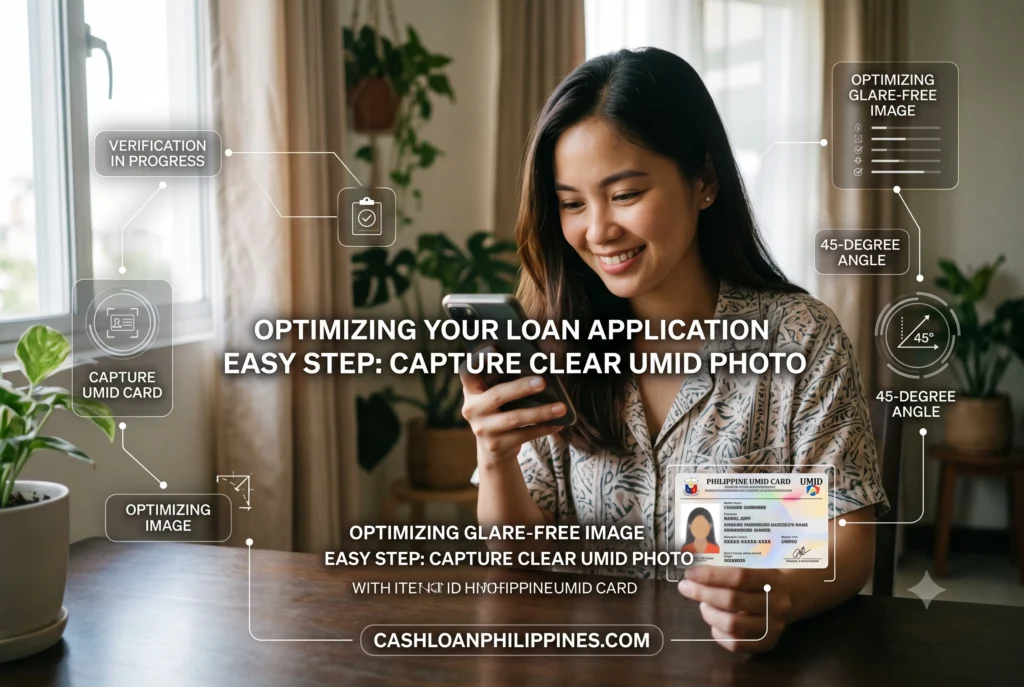
If your ID has scratches across the text, do not use the camera flash. Flash photography creates localized hotspots of pure white light (specular highlights) that completely erase the text underneath. Instead, walk to a window and utilize indirect natural sunlight. Angle your smartphone precisely 45 degrees over the document rather than directly overhead to eliminate any shadow cast by your own hands. If the barcode or QR code remains intact and the vital details are legible, the system can cross-reference the incomplete text fragments to validate your identity.
What alternative documents prove your income and billing?
If you lack standard utility bills, digital banks and loan apps accept e-wallet statements, barangay certificates, or internet bills. For income, freelancers can use PayPal transaction histories or digital bank deposit logs to demonstrate cash flow.
How do you submit a freelancer income proof without standard payslips?
The gig economy represents a massive segment of the Philippine borrowing market, yet independent contractors do not possess traditional corporate payslips or Certificates of Employment (COE). Progressive credit platforms evaluate cash flow rather than static employment status.
When preparing a freelancer income proof, algorithms look for consistent, recurring inward remittances. You can extract your monthly transaction history from e-wallets, Upwork earning certificates, or digital bank statements. The critical factor is consistency. Lenders want to see deposits occurring on regular intervals (e.g., every 15th and 30th). Ensure that the name on your digital transaction history perfectly matches the name extracted from your primary ID. Any discrepancy – even a missing middle initial – can flag the account for potential synthetic identity fraud.
What if I don’t have a proof of billing under my own name?
A significant portion of the Philippine population rents apartments or lives with extended family, meaning the Manila Electric Company (Meralco) or water utility bill is rarely in the borrower’s name.
Fintech operators have adjusted their risk models to accommodate this reality. If the primary utility bill features a different name, you can supplement it with a Barangay Certificate of Residency, which explicitly links your identity to that exact address. Alternatively, post-paid telecommunications bills, internet service provider invoices, or even consistently addressed e-commerce delivery receipts are increasingly recognized by algorithmic underwriting engines as valid indicators of residential stability.
How do you complete a step-by-step digital loan application without verification errors?
To execute a flawless step-by-step digital loan application, borrowers must align their ID perfectly within the on-screen frame, ensure stable internet connection during data extraction, and input details exactly as they appear on the submitted document.
The operational reality of completing a digital loan application is that user error accounts for a massive percentage of rejections. The onboarding flow requires precise execution.
First, ensure your device’s camera lens is physically wiped clean; smudges cause light diffusion that ruins OCR accuracy. Second, when the application prompts you to frame the document, place it on a dark, non-reflective surface to create maximum contrast with the edges of the card. Third, grant the application all necessary device permissions temporarily (camera, location, and sometimes device storage). Fintech platforms utilize device fingerprinting during the application process. If your GPS location does not match the IP address or the stated residential address, the fraud prevention engine will block the transaction to protect consumers against remote cyber syndicates. Finally, never attempt to apply while connected to a public Wi-Fi network, as the unstable packet transfer can corrupt the high-resolution biometric image upload, resulting in a silent failure of the verification process.
Conclusion
Navigating the digital credit ecosystem requires operational awareness. Obtaining fast cash through legitimate mobile platforms relies entirely on how well your submitted data interfaces with automated underwriting technology. By prioritizing primary, machine-readable documents like the PhilSys ID or UMID, managing lighting variables during the liveness check, and providing modern digital income statements, you eliminate the friction that causes delays. Borrowers must protect their financial data, interact only with platforms registered with regulatory bodies, and recognize that strict ID verification protocols exist fundamentally to protect consumers from identity theft.
References
- Bangko Sentral ng PilipinasOrganization: BSPResource: Manual of Regulations for Banks (MORB) – Financial Consumer ProtectionURL: https://www.bsp.gov.ph/
- Securities and Exchange Commission PhilippinesOrganization: SEC PhilippinesResource: List of Registered Online Lending PlatformsURL: https://www.sec.gov.ph/
- National Privacy CommissionOrganization: NPCResource: Data Privacy Guidelines for Lending ApplicationsURL: https://www.privacy.gov.ph/
- Philippine Statistics AuthorityOrganization: PSAResource: PhilSys National ID Verification GuidelinesURL: https://philsys.gov.ph/
Community & User Experience Sources
- Reddit PhilippinesOrganization: r/phinvest CommunityResource: Digital Banking and E-KYC Approval DiscussionsURL: https://www.reddit.com/r/phinvest/
Last Updated on October 3, 2026 by Maria Santos
