
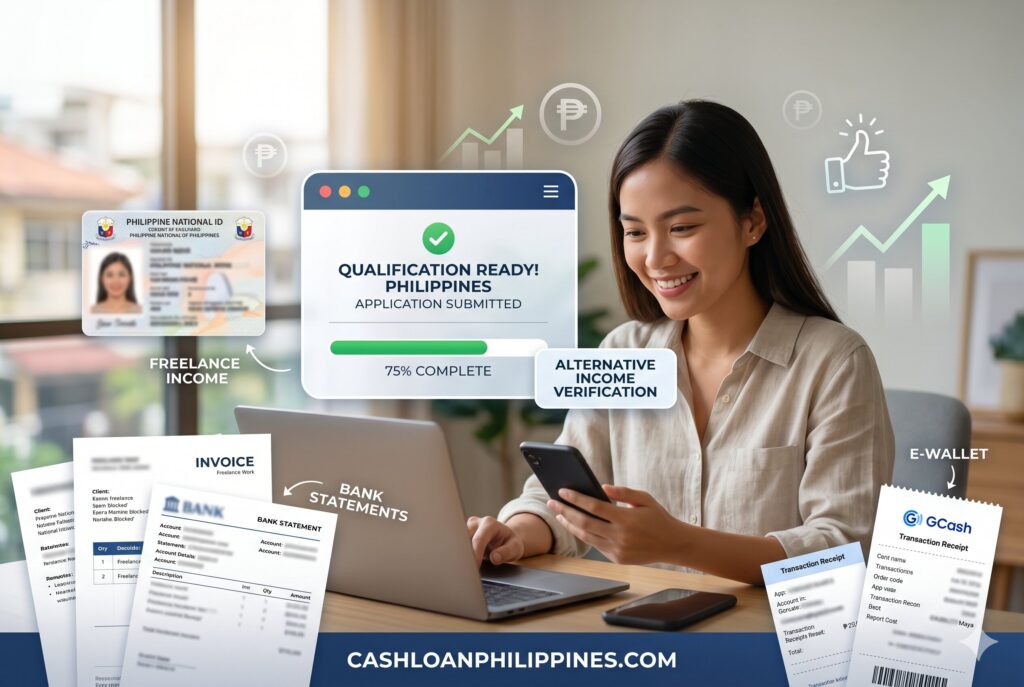
Getting approved for a digital loan without a traditional payslip is now possible in the Philippines, especially for freelancers, online sellers, delivery riders, commission earners, and self-employed workers. Many lending apps no longer rely only on employer-issued salary documents. Instead, they evaluate alternative income proof such as bank statements, GCash transaction history, remittance records, e-wallet cash flow, online selling activity, and recurring digital deposits.
Borrowers applying for a loan app without payslip Philippines usually succeed when they can show stable cash flow, consistent account activity, valid identity documents, and realistic repayment capacity. Digital lenders increasingly use alternative underwriting systems that analyze transaction behavior rather than formal employment alone. Preparing upload-ready proof of income before applying significantly reduces rejection risk and speeds up verification.
Why Many Filipinos Apply Without Payslips 📱
Traditional payslips work well for salaried employees, but millions of Filipinos earn income outside formal payroll systems. Digital lending platforms have adjusted their approval models because the modern workforce now includes:
- Freelancers working with overseas clients
- TikTok and Facebook live sellers
- Grab and food delivery riders
- Online resellers
- Affiliate marketers
- Commission-based sales agents
- Small sari-sari store owners
- Remote VA workers paid through digital wallets
- Construction workers with cash-based income
- Seasonal earners
Many borrowers searching for a loan app without payslip Philippines are not unemployed. They simply lack standard HR-issued documents.
Modern fintech underwriting systems focus more on:
- Cash flow consistency
- Account activity patterns
- Income frequency
- Spending behavior
- Wallet balance trends
- Repayment signals
- Identity verification strength
This is why borrowers with stable digital transactions can sometimes qualify faster than formally employed applicants with weak banking activity.
What Loan Apps Usually Accept Instead of Payslips ✔️
Most Philippine lending apps now allow substitute income verification methods. The exact requirements vary depending on loan size, risk score, and borrower history.
Digital Wallet Transaction History
GCash and Maya transaction records are among the most common alternative income proofs today.
Apps may review:
- Incoming payments
- Wallet balance movement
- Cash-in frequency
- Transfer consistency
- Merchant activity
- Monthly transaction volume
Freelancers receiving payments through GCash often use screenshots or downloadable transaction records during verification.
Bank Statements
Bank statements remain one of the strongest alternatives to payslips.
Lenders usually look for:
- Regular deposits
- Stable monthly inflow
- Reduced overdraft activity
- Active account usage
- Consistent ending balances
Even irregular earners can qualify if deposits appear predictable over several months.
Remittance Records
OFW-supported households and commission earners sometimes rely on:
- Cebuana receipts
- Palawan Express records
- Western Union transfers
- Remittance center transaction history
These documents help establish recurring income sources.
Online Selling Proof
Many online sellers use:
- Shopee earnings
- Lazada payouts
- TikTok Shop income
- Facebook Marketplace transactions
- Seller dashboard screenshots
Digital lenders increasingly recognize ecommerce income as legitimate cash flow.
Platform Earnings Records
Gig workers can upload:
- Grab weekly statements
- Foodpanda earnings summaries
- Angkas trip records
- Upwork payment history
- PayPal transaction logs
These records help estimate average income stability.
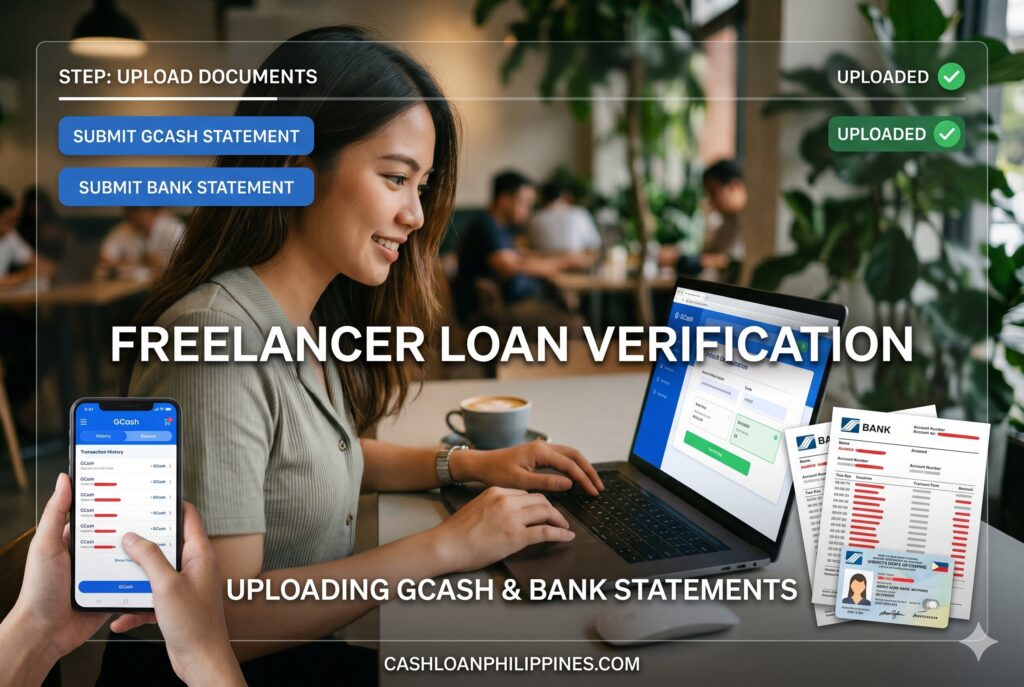
Freelancer Uploading GCash and Bank Statement for Loan Verification
How Loan Apps Evaluate Borrowers Without Formal Employment
Many borrowers assume approval depends only on monthly salary size. In reality, fintech lenders use broader underwriting models.
Cash Flow Consistency Matters More Than Income Labels
A freelancer earning ₱25,000 monthly through multiple clients may appear safer than a salaried worker with unstable expenses.
Lenders often examine:
- Frequency of deposits
- Transaction timing
- Income volatility
- Wallet activity patterns
- Spending discipline
- Existing loan obligations
Irregular income is not automatically a rejection factor.
What matters more is whether the borrower shows:
- Repeatable earning activity
- Stable inflows
- Sufficient repayment capacity
Alternative Underwriting Signals
Digital lenders now use non-traditional risk indicators, including:
- Device consistency
- SIM registration match
- Digital identity verification
- Contactability
- Geolocation stability
- Transaction history depth
- E-wallet behavior
- Existing lending app repayment history
This explains why some applicants without payslips still receive approval quickly.
Why Sudden Large Deposits Can Trigger Reviews
Applicants sometimes try to improve approval odds by transferring large amounts into their account shortly before applying.
This may trigger:
- Manual verification
- Additional document requests
- Fraud risk flags
Most fintech systems evaluate transaction history patterns over time, not isolated deposits.
Best Alternative Documents for Different Borrower Types
Different income sources require different preparation strategies.
Freelancers Working With Overseas Clients
Strong supporting documents include:
- PayPal transaction records
- Wise transfer history
- Upwork earnings reports
- Client invoices
- Bank statements showing foreign deposits
Freelancers should avoid uploading cropped screenshots with missing dates or incomplete account details.
Delivery Riders and Gig Workers
Grab riders and delivery workers often succeed using:
- Weekly earnings summaries
- Incentive payout records
- GCash cash-in history
- Fuel purchase patterns
- Daily booking activity
Consistent weekly earnings can strengthen approval scoring.
Online Sellers and Live Sellers
TikTok and Facebook sellers may use:
- Seller center revenue records
- Shipment histories
- COD payout screenshots
- E-wallet transfers
- Bank deposits linked to store income
Lenders typically look for repeated selling activity rather than one-time viral sales.
Commission Earners
Insurance agents, property sellers, and commission-based workers often upload:
- Commission slips
- Bank deposits
- Agency payout records
- Sales incentive history
Stable commissions over multiple months generally improve approval chances.
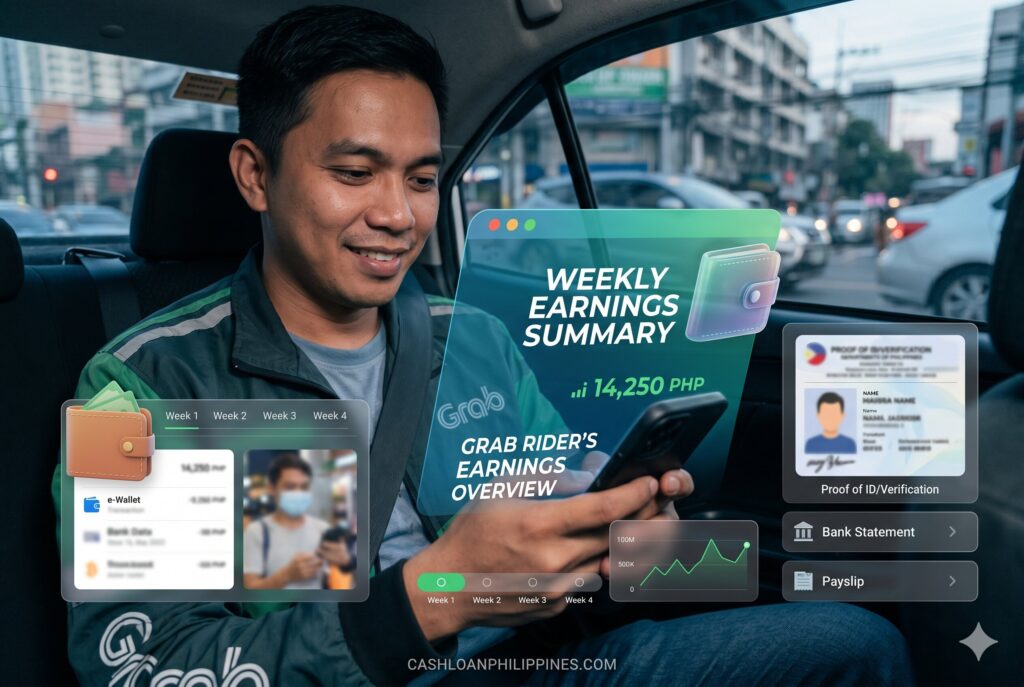
Grab Rider Reviewing Weekly Earnings Summary on Mobile App
Quick Approval Tactics That Actually Help ✅
Many borrowers focus only on documents while ignoring operational verification factors.
Maintain Consistent Contact Information
Loan apps often compare:
- SIM registration details
- ID information
- Device data
- Mobile account activity
Frequent SIM changes or mismatched personal details can delay approval.
Prepare Clear and Readable Uploads
Blurry screenshots commonly trigger rejections.
Documents should:
- Show complete dates
- Include account holder name
- Display transaction history clearly
- Avoid edits or cropped sections
Use Active Accounts
Dormant bank accounts weaken credibility.
Lenders prefer accounts with:
- Recent activity
- Multiple transactions
- Regular usage patterns
Avoid Simultaneous Multiple Applications
Applying to many loan apps at once may increase risk signals.
Some fintech systems can detect:
- Recent application surges
- Device-linked loan activity
- Existing unpaid balances
Spacing out applications is generally safer.
Common Reasons Borrowers Get Rejected Without Payslips 🚫
Many applicants actually meet income requirements but fail operational verification checks.
Weak Transaction History
Problems include:
- Newly created e-wallet accounts
- Minimal banking activity
- Very low balances
- Irregular deposits
A strong transaction history usually develops over time.
Inconsistent Identity Information
Rejections often happen because:
- IDs use different name formats
- Address details do not match
- Mobile numbers differ across accounts
KYC verification systems flag inconsistencies automatically.
Edited or Suspicious Screenshots
Loan apps actively screen for manipulated uploads.
Potential red flags:
- Missing transaction references
- Cropped balances
- Unusual fonts
- Inconsistent timestamps
Existing Delinquent Loans
Even without payslips, borrowers with good repayment history may still qualify.
However, unpaid digital loans often lower approval odds significantly.
Can GCash History Really Be Accepted? 💡
Yes, many Philippine digital lenders now review GCash activity as part of income verification.
What Makes GCash Records Useful
GCash transaction history can show:
- Stable cash inflows
- Customer payments
- Salary substitutes
- Business earnings
- Wallet usage behavior
Frequent wallet activity may strengthen borrower credibility.
What Weakens GCash-Based Applications
Some applications fail because:
- The wallet is rarely used
- Transactions are extremely small
- Activity appears artificially inflated
- Incoming funds are inconsistent
Wallet activity alone may not always be enough for larger loan amounts.
Combining GCash With Other Proofs
Borrowers improve approval chances by pairing GCash records with:
- Bank statements
- Seller dashboards
- Remittance receipts
- Platform earnings summaries
This creates a stronger financial profile.
Is Bank Activity Alone Enough?
Sometimes yes — especially for smaller digital loans.
When Bank Statements Work Well
Bank activity becomes stronger proof when:
- Deposits occur regularly
- Account usage is active
- Income sources appear consistent
- There are no repeated overdrafts
Some lenders prioritize transaction behavior more than employment classification.
When Additional Proof Is Needed
Extra documents may still be requested if:
- Deposits appear irregular
- Account activity is too recent
- Income sources are unclear
- Loan amounts are higher
This is common during enhanced verification reviews.
Borrower Profiles That Commonly Qualify Without Payslips
Freelancers With Stable Client Payments
Freelancers usually perform well when they can show:
- Repeat client payments
- Consistent monthly deposits
- Active digital wallets
- Strong ID verification
Small Online Sellers
Even small ecommerce sellers may qualify if they demonstrate:
- Frequent transactions
- Repeat buyer activity
- Consistent COD payouts
- Stable selling history
Gig Workers With Daily Earnings
Delivery riders and transport workers often qualify because:
- Daily earnings generate predictable cash flow
- Wallet activity remains active
- Platform records are easy to verify
Commission Earners
Insurance agents and property brokers may qualify despite fluctuating monthly income if longer-term patterns appear stable.
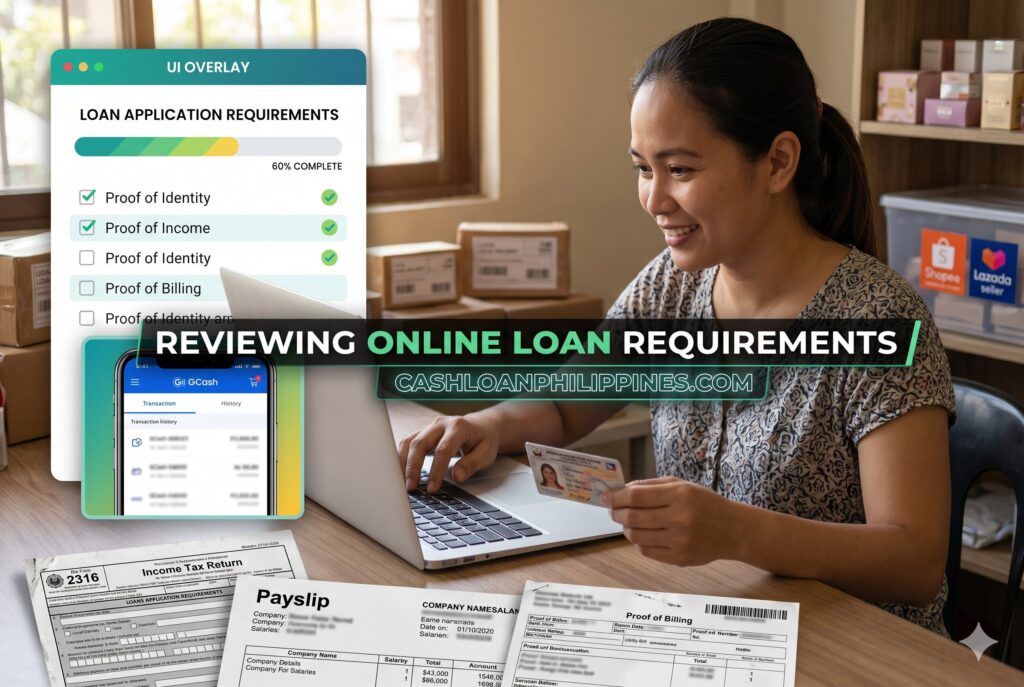
Philippine Online Seller Reviewing Loan App Requirements on Laptop
Practical Checklist Before Applying 📝
Preparing documents properly can reduce verification delays.
Prepare These Before Submission
Helpful uploads include:
- Valid government ID
- Active mobile number
- GCash transaction history
- Bank statements
- Remittance receipts
- Seller earnings reports
- Platform payout records
Borrowers should also review:
- internal linking opportunity using anchor text: all loan app requirements
- identity preparation steps related to requirements for first-time borrowers
- repayment evaluation factors connected to how approval scoring works
Check Your Digital Footprint
Loan apps increasingly evaluate:
- Contact consistency
- Device reliability
- App behavior
- Existing financial obligations
Applicants using fake references or borrowed accounts often fail verification.
Keep Loan Expectations Realistic
First-time borrowers without payslips are usually offered:
- Smaller loan limits
- Shorter repayment periods
- Gradual credit increases after successful repayment
Responsible repayment behavior often matters more than initial income classification.
Can Freelancers Get Approved Without Payslips?
Yes. Freelancers are now among the fastest-growing borrower groups in Philippine digital lending.
Most lenders simply need proof that:
- Income exists
- Cash flow is active
- Identity is verifiable
- Repayment appears manageable
Freelancers with recurring client payments and active bank or e-wallet records often qualify more easily than applicants with inactive salary accounts.
Do Commission Earners Qualify for Loan Apps?
Yes, especially when commission payouts are trackable.
Useful proof includes:
- Incentive statements
- Agency payout records
- Commission deposit history
- Client payment logs
The key factor is recurring income behavior rather than fixed salary employment.
How Digital Lending Verification Works Behind the Scenes
Many borrowers do not realize how automated modern lending systems have become.
Automated KYC Verification
Loan apps commonly perform:
- Facial verification
- ID authenticity checks
- Device fingerprinting
- SIM ownership validation
These checks help reduce identity fraud.
Cash Flow Estimation Models
Some fintech lenders estimate earning capacity using:
- Deposit frequency
- Wallet turnover
- Spending behavior
- Historical balances
This is why digital activity matters heavily for non-traditional earners.
Risk-Based Loan Sizing
Borrowers without payslips may still receive approval, but:
- Initial limits are often smaller
- Higher-risk profiles receive shorter terms
- Repeat borrowers usually gain larger offers over time
This reflects operational lending risk management rather than discrimination against freelancers or gig workers.
Safe Borrowing Reminders ⚠️
Before applying to any digital lender:
- Verify SEC registration when applicable
- Review repayment schedules carefully
- Avoid apps demanding advance processing fees
- Read privacy permissions before installation
- Borrow only based on realistic repayment capacity
A fast approval is not always a good loan if repayment terms are harmful.
Conclusion
Applying for a loan app without payslip Philippines is now far more realistic than it was a few years ago. Philippine fintech lenders increasingly evaluate real-world cash flow instead of relying only on formal employment records. Freelancers, online sellers, Grab riders, commission earners, and self-employed borrowers can improve approval chances by preparing strong alternative income proof such as GCash transaction history, bank statements, remittance records, and platform earnings summaries.
The most successful applicants usually focus on consistency, document clarity, active digital financial behavior, and accurate identity verification. Responsible borrowing habits, realistic loan expectations, and proper preparation remain essential for safer approval outcomes and healthier long-term financial access.
Last Updated on September 9, 2026 by Maria Santos
