
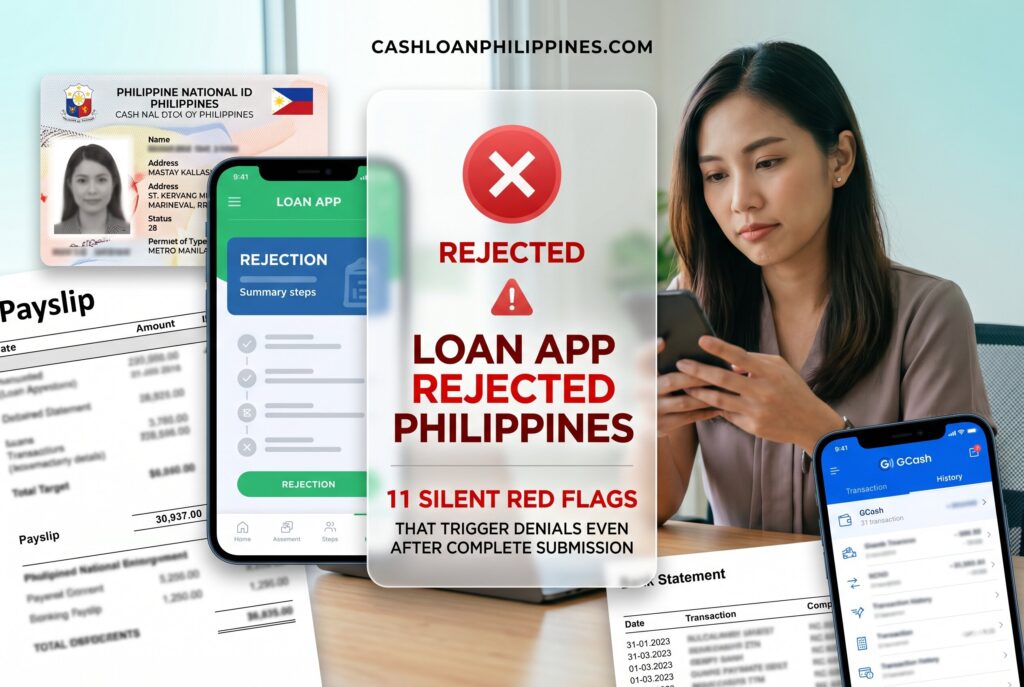
Many borrowers in the Philippines feel frustrated after submitting a complete loan application only to receive a rejection minutes or hours later. In many cases, the issue is not missing documents. Digital lenders now rely on automated underwriting systems, fraud detection models, device reputation databases, repayment history systems, and behavioral risk scoring tools that analyze far more than IDs and selfies.
Summary:
A “loan app rejected Philippines” result often happens because of hidden risk indicators rather than incomplete requirements. Philippine lending apps evaluate device history, duplicate accounts, inconsistent profile details, repayment behavior, selfie verification quality, application frequency, SIM ownership, geolocation patterns, and fraud scoring indicators. Even borrowers with complete documents may be flagged by automated underwriting systems if they apply to multiple lenders rapidly, reuse devices linked to previous defaults, enter conflicting information, or trigger suspicious behavior patterns. Waiting before reapplying, correcting profile inconsistencies, improving digital identity consistency, and reducing high-risk activity can improve future approval chances significantly.
Digital lending in the Philippines has become more data-driven over the last few years. Modern fintech lenders no longer rely solely on traditional credit checks. Many platforms now combine automated underwriting with behavioral analytics, e-wallet verification, telecom signals, and fraud prevention systems to reduce repayment risk.
That means a borrower can upload every required document and still fail the approval process.
For applicants, this creates confusion because rejection messages are often vague:
- “Application not approved”
- “Unable to verify information”
- “Risk assessment failed”
- “Not eligible at this time”
These messages rarely explain the actual trigger behind the denial.
This article breaks down the hidden approval signals many borrowers overlook, how silent rejection triggers work inside Philippine loan apps, and what practical steps can improve approval chances before reapplying.
Why Loan Apps Reject Applications Even With Complete Documents 📱
Completing the application form does not automatically mean the borrower passed the lender’s risk assessment.
Most Philippine loan apps now evaluate:
- Identity consistency
- Device trustworthiness
- Repayment probability
- Fraud likelihood
- Behavioral patterns
- Application timing
- Historical account associations
- Digital footprint stability
A borrower may technically meet the visible requirements while failing hidden automated checks.
The Real Approval Process Behind Philippine Loan Apps
After submission, most fintech lenders process applications through layered verification systems:
- Identity verification
- Facial recognition matching
- Device fingerprint analysis
- SIM ownership checks
- Income consistency review
- Repayment history review
- Fraud scoring
- Behavioral risk scoring
- Duplicate account detection
- Automated underwriting approval
This is why some applicants receive instant denials within minutes. The system already detected elevated risk indicators before a human reviewer even saw the application.
Why “Complete Requirements” Is Not Enough
Many borrowers focus only on submitting:
- Valid government ID
- Selfie verification
- Proof of income
- Billing information
But underwriting systems also analyze invisible signals such as:
- How many loan apps were installed recently
- Whether the device was previously linked to unpaid loans
- Typing behavior consistency
- GPS location stability
- SIM registration alignment
- Frequency of rejected applications
- Device factory resets
- IP address anomalies
These data points help lenders detect fraud, identity manipulation, and high-risk borrowing patterns.
11 Hidden Reasons Your Loan App Was Rejected in the Philippines
Multiple Same-Day Applications Trigger Risk Alerts 🚨
One of the biggest silent rejection triggers is application velocity monitoring.
When borrowers apply to several loan apps within the same day, underwriting systems may interpret this as financial distress or fraud risk.
This commonly happens when users panic after one rejection and immediately apply elsewhere.
High application frequency can indicate:
- Urgent cash dependency
- Potential repayment difficulty
- Loan stacking behavior
- Fraud testing activity
Some lenders share risk signals through repayment history systems and fraud-monitoring partners. Rapid application behavior can therefore reduce approval chances across multiple apps.
What To Do Instead
- Wait several days before applying elsewhere
- Avoid mass applications
- Improve profile consistency first
- Focus on one legitimate lender at a time
This is one of the most practical ways to improve loan app approval outcomes.
Device Reputation Databases May Already Flag Your Phone
Many borrowers do not realize that their device itself may carry a negative trust score.
Lenders use device reputation databases to identify:
- Phones linked to previous unpaid loans
- Shared devices
- Fraud-associated hardware
- Emulator usage
- Recycled identities
If multiple rejected or delinquent accounts were previously used on the same phone, future applications may inherit elevated risk scores.
Shared Devices Can Create Approval Problems
A common issue in the Philippines involves:
- Family-shared smartphones
- Second-hand devices
- Internet café devices
- Borrowed phones
If another user defaulted on loans using that device, the next applicant may be flagged automatically.
This explains why some applicants with valid income still receive instant denials.
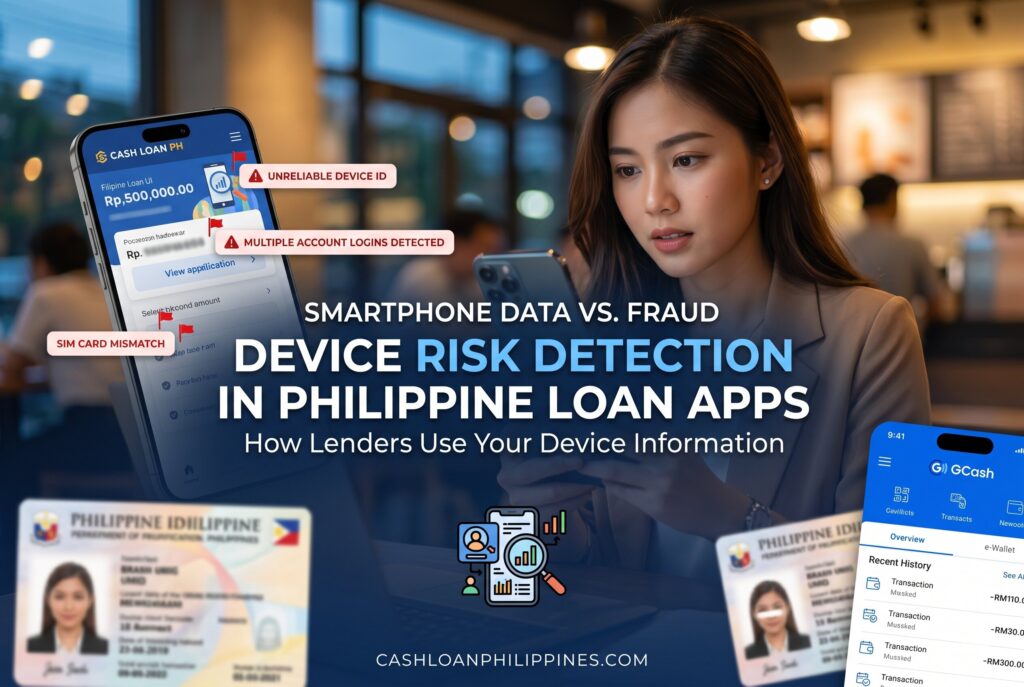
Device Risk Detection in Philippine Loan Apps
Warning Signs Your Device May Be Flagged
Possible indicators include:
- Instant rejection after submission
- Repeated denials across different apps
- Verification failures despite clear documents
- Requests for repeated selfie checks
In some cases, resetting the device does not fully remove device-linked behavioral records.
Profile Inconsistencies Quietly Lower Trust Scores
Minor inconsistencies can significantly affect approval decisions.
Automated underwriting systems compare data across:
- IDs
- E-wallet accounts
- Mobile numbers
- Billing addresses
- Employment records
- Bank accounts
- GPS activity
- Social verification signals
Even small mismatches can increase fraud suspicion.
Common Inconsistency Triggers
Examples include:
- Different address spellings
- Nickname variations
- Incorrect birth dates
- Mismatched employment dates
- Different signatures
- Inconsistent income declarations
A borrower might enter “Quezon City” in one app and “QC” in another. While this seems harmless, automated systems may detect inconsistency patterns.
Address Problems Are More Common Than Borrowers Think
Many borrowers move frequently, rent bedspaces, or use provincial and Metro Manila addresses interchangeably.
If geolocation activity does not align with the declared address, risk scores may increase.
Borrowers working remotely or traveling frequently can unintentionally trigger location inconsistencies.
Selfie Verification Failures Often Happen Silently 🤳
Some applications fail during facial verification even if the app never explicitly says so.
Modern loan apps use:
- Facial landmark mapping
- Liveness detection
- Reflection analysis
- Deepfake detection
- Image quality scoring
Poor lighting, filters, blurry cameras, or outdated IDs can reduce verification confidence scores.
Common Selfie Verification Mistakes
Frequent issues include:
- Wearing caps or glasses
- Dim lighting
- Camera smudges
- Heavy filters
- Cropped face positioning
- Old ID photos
- Fast head movement during liveness checks
Borrowers dealing with repeated facial verification issues may benefit from reviewing selfie verification rejection fixes before reapplying.
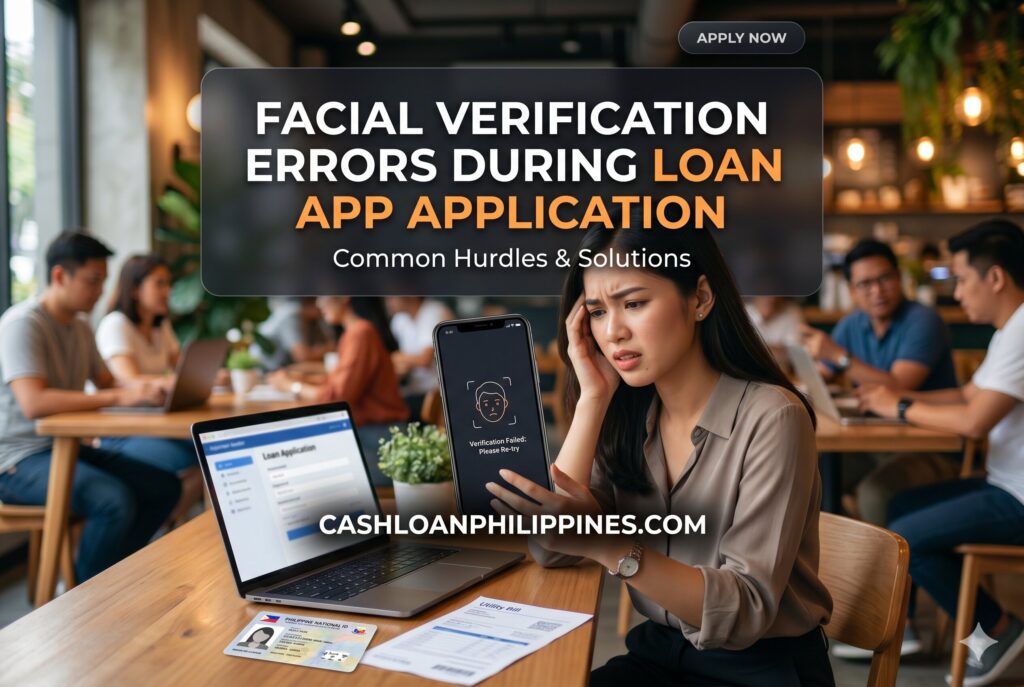
Facial Verification Errors During Loan App Application
Why Some Selfie Rejections Are Not Explained
Fraud prevention systems intentionally hide certain rejection reasons to prevent manipulation by fraud rings.
That is why many apps simply display generic denial messages instead of explicitly mentioning selfie mismatch problems.
Duplicate Accounts Create Major Approval Risks
Duplicate account detection is a major part of digital lending fraud prevention.
Lenders may reject applications if they detect:
- Multiple accounts under one identity
- Reused IDs
- Shared bank accounts
- Shared mobile numbers
- Recycled email addresses
Even accidental duplicate registrations can create risk alerts.
Common Causes of Duplicate Account Flags
This often happens when borrowers:
- Forget old accounts
- Change phone numbers
- Re-register after app deletion
- Use multiple SIM cards
- Apply using old and new emails
If the system detects conflicting borrower identities, the application may fail automatically.
Repayment History Systems Affect More Than Traditional Credit
Many borrowers assume that only banks check repayment history.
In reality, some digital lenders analyze:
- Previous fintech repayment behavior
- BNPL activity
- E-wallet loan usage
- Microloan repayment records
- Installment payment history
Late repayments, rollovers, and unpaid balances can influence automated risk scores.
Even Small Delays Matter
Repeated small delays may signal:
- Cash flow instability
- High debt dependence
- Financial stress patterns
Some lenders focus heavily on repayment consistency rather than income size alone.
This is especially true for short-term digital lending products.
Fraud Scoring Systems Analyze Behavioral Signals
Modern fintech systems analyze behavior patterns beyond submitted documents.
This includes:
- Typing speed
- Screen navigation behavior
- Copy-paste activity
- GPS switching
- VPN usage
- SIM swapping
- App permissions behavior
These patterns help identify synthetic identities and coordinated fraud attempts.
High-Risk Digital Behaviors
Borrowers sometimes trigger fraud scoring unintentionally by:
- Using VPNs
- Frequently changing devices
- Installing cloned apps
- Applying while traveling
- Using modified Android systems
- Switching SIM cards repeatedly
While none of these behaviors guarantee rejection, combined risk indicators may reduce approval probability.
Employment Verification Problems Still Matter
Despite automation, employment consistency remains important.
Fintech lenders assess whether:
- Income is stable
- Employment matches declared lifestyle
- Contact references appear valid
- Work details are verifiable
Gig Workers and Freelancers Face Different Challenges
Freelancers, online sellers, riders, and gig-economy workers are not automatically disqualified.
However, unstable income patterns may require stronger consistency signals.
Helpful supporting behaviors include:
- Regular e-wallet cash flow
- Consistent bank transactions
- Stable contact information
- Longer SIM ownership duration
Applicants without formal payslips should focus on alternative proof consistency instead of inflating declared income.
Reapplication Timing Can Hurt Approval Odds ⏳
Many borrowers worsen rejection problems by reapplying too quickly.
Some lenders use cooldown behaviors after denials.
Repeated applications within short periods can signal desperation or attempted system bypassing.
Recommended Waiting Periods
While policies vary, many fintech systems react negatively to:
- Same-day reapplications
- Multiple retries after rejection
- Rapid profile edits before resubmission
A safer approach is usually:
| Rejection Type | Suggested Waiting Time |
|---|---|
| Facial verification issue | 24 – 72 hours |
| Incomplete verification | 3 – 7 days |
| Risk-based rejection | 2 – 4 weeks |
| Multiple recent denials | 1 – 2 months |
This waiting period allows fraud scoring systems and behavioral risk models to reset partially.
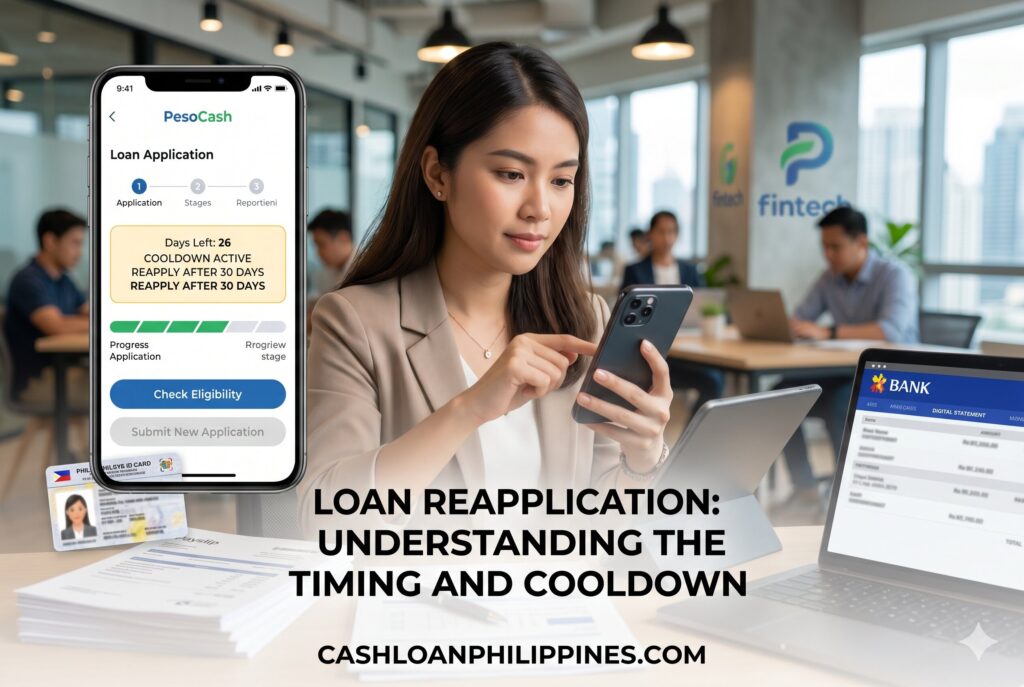
Loan Application Cooldown and Reapplication Timing
Borrowers Often Overlook SIM and Digital Identity Stability
SIM ownership has become increasingly important in Philippine fintech onboarding.
Many lenders now compare:
- SIM registration details
- Device ownership signals
- E-wallet identities
- Banking records
- Contact network consistency
Frequent Number Changes Reduce Trust
Borrowers who constantly switch numbers may appear less stable to underwriting systems.
Stable digital identity patterns generally help:
- Approval consistency
- Verification confidence
- Fraud risk reduction
Long-term mobile number usage can quietly strengthen borrower trust profiles.
What To Do Immediately After a Loan App Rejection
Step 1: Stop Submitting Multiple Applications
Mass-applying usually worsens risk scoring.
Pause applications temporarily and review possible triggers first.
Step 2: Review All Submitted Information
Check for:
- Address mismatches
- Name inconsistencies
- Incorrect dates
- Blurry uploads
- SIM changes
- Duplicate accounts
Many borrowers overlook small inconsistencies that automated systems detect instantly.
Step 3: Improve Digital Identity Consistency
Focus on stability across:
- Mobile numbers
- E-wallet accounts
- Addresses
- Employment records
- Device usage
Consistency matters more than perfection.
Step 4: Rebuild Borrower Credibility Gradually
Helpful actions may include:
- Paying existing obligations on time
- Maintaining stable cash flow
- Avoiding excessive borrowing
- Using legitimate financial apps only
Step 5: Review Your Full Application Preparation
Borrowers who repeatedly face denials should revisit their complete loan app requirements preparation process to identify overlooked weaknesses.
Quick Answers: Most Common Rejection Questions
Why Was I Rejected Despite Complete Documents?
Because lenders evaluate hidden risk signals beyond documents, including device reputation, fraud scoring, repayment behavior, profile consistency, and application velocity.
Can Multiple Applications Hurt Approval?
Yes. Applying to several loan apps quickly can trigger risk alerts associated with financial distress or loan stacking behavior.
How Long Should I Wait Before Reapplying?
It depends on the rejection type, but waiting at least several days or weeks is often safer than immediate reapplication.
Can Device History Affect Approval?
Yes. Devices linked to prior defaults, duplicate accounts, or suspicious activity may reduce approval chances.
Borrower Behaviors That Quietly Improve Approval Odds ✅
Many borrowers focus only on income, but digital lenders increasingly reward consistency and low-risk behavior patterns.
Positive signals may include:
- Stable mobile number usage
- Consistent addresses
- Reliable repayment history
- Clear selfie verification
- Moderate borrowing frequency
- Stable e-wallet transaction patterns
- Realistic income declarations
- Longer account age
These behaviors help automated underwriting systems classify applicants as lower risk over time.
Red Flags That Commonly Trigger Silent Rejections
Here are some of the most common hidden triggers seen across Philippine lending apps:
| Silent Trigger | Why It Raises Risk |
|---|---|
| Multiple same-day applications | Indicates possible financial distress |
| Shared device usage | Device linked to other accounts |
| Inconsistent addresses | Identity mismatch risk |
| VPN usage | Possible fraud masking |
| Duplicate accounts | Identity conflict |
| Frequent SIM changes | Low digital stability |
| Blurry selfie verification | Low facial confidence score |
| Prior unpaid digital loans | Higher repayment risk |
| Rapid reapplication attempts | System bypass behavior |
BSP-Aligned Compliance and Why Verification Is Getting Stricter
Philippine fintech lenders operate in an environment with stronger fraud prevention expectations and digital identity monitoring.
As digital lending expands, platforms increasingly prioritize:
- Know Your Customer (KYC) compliance
- Identity verification accuracy
- Anti-fraud monitoring
- Responsible lending assessments
This explains why verification systems have become stricter compared to earlier years when approvals were easier and less regulated.
Legitimate lenders now invest heavily in automated risk analysis to reduce identity fraud, fake accounts, and repayment losses.
Conclusion
A “loan app rejected Philippines” result does not always mean the borrower lacks income or failed to submit requirements. In many cases, silent rejection triggers inside automated underwriting systems play a much bigger role.
Device reputation databases, fraud scoring tools, repayment history systems, duplicate account detection, profile inconsistencies, and rapid application behavior can all quietly reduce approval chances even when documents appear complete.
Before reapplying, borrowers should slow down, review inconsistencies carefully, improve digital identity stability, and avoid risky application behavior. Responsible borrowing habits, realistic income declarations, and stronger verification consistency usually produce better long-term results than rushing through multiple applications.
Digital lending approval is increasingly based on trust signals, not just uploaded documents.
Last Updated on September 15, 2026 by Maria Santos
